The wrong spar in the sleeve keeps the kite on the ground. Record the rod, the side, and the connector, then order the replacement from the maker of that kite.
A page that sells one model’s spare pair, or a catalog of fittings, still leaves those three fields blank.
Buy the spar from the maker of that kite, and only after the checklist names the rod, the side, and the connector. Prism’s field-repair booklet, fetched 11 October 2026, says replacement rods for current Prism models, and for most discontinued Prism models, are ordered from Prism’s website. Peregrine Hawk’s spar page, fetched the same day, tells a Hawk owner to specify a tail spar, a female wing spar with a brass ferrule, or a male wing spar, and says a complete spar kit is on that maker’s store. Those Hawk names belong to Hawk kites. A catalog length leaves the other fields blank, and a missing size stays missing.
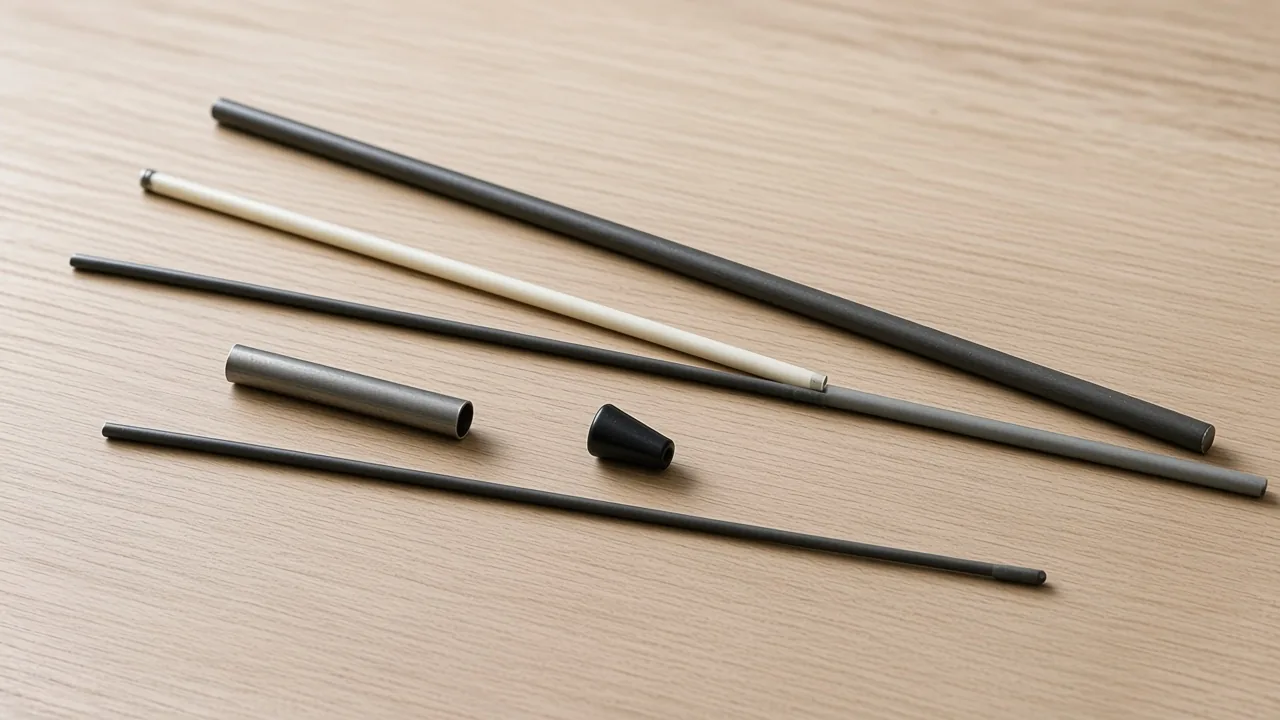
Where can you buy a replacement kite spar online?
Order it from the maker named on that kite, using the part name that maker publishes for the model.
Prism’s field-repair booklet, fetched 11 October 2026, says replacement rods for current Prism models, and for most discontinued Prism models, are ordered from Prism’s website. Peregrine Hawk’s spar page, fetched the same day, tells a Hawk owner to specify a tail spar, a female wing spar with a brass ferrule, or a male wing spar. The same page says a complete spar kit is on that maker’s store. Keep those names on those kites.
A US English desktop search on 11 October 2026 returned single-model spares, parts catalogs, forum threads, and one maker’s own spar note. The readable pages sell one kite’s parts or list fittings. They do not carry a reader from a broken rod on an unnamed kite to the connector, the side, and a blank for a missing size. This page ranks no sellers and prints no prices.
Takeaway: Use the maker’s part name for that model. A shared catalog title leaves the checklist unfinished.
Which rod is broken?
Name the piece before you measure it. A framed dual-line stunt kite uses a spine, leading edges, spreaders, and standoffs. Those names, and the foil that has no rods, are on the stunt kite parts page. The rows below add the connector and the side.
| What you are holding | Name to write | Where that name is defined | Extra field |
|---|---|---|---|
| Center rod from the nose toward the tail | Spine | Prism’s booklet. On the kites in that booklet, most spines are held by a strap at the tail and pass through the center T into the nose. | End caps or fittings, if the original has them |
| Rod along the wing | Leading edge, upper or lower when it is two pieces | Prism’s booklet says most kites use a two-piece leading edge, with a ferrule in the wing sleeve about halfway down the wing. Some ferrules are internal sockets. Some are external tubes the other rod slides over. | Which half, and internal or external |
| Rod across the kite | Spreader, upper or lower | Prism’s booklet names both. It says beginners most often break a spine or a lower spreader. On lower spreaders with an internal connector at the center T, the booklet says the female side is three times more likely to break than the male. | Left or right, and male or female if the joint shows it |
| Thin rod from the sail to a spreader | Standoff | Prism’s booklet says standoffs are often lost rather than broken, and the cap on the back can come off. | Whether the cap is still there |
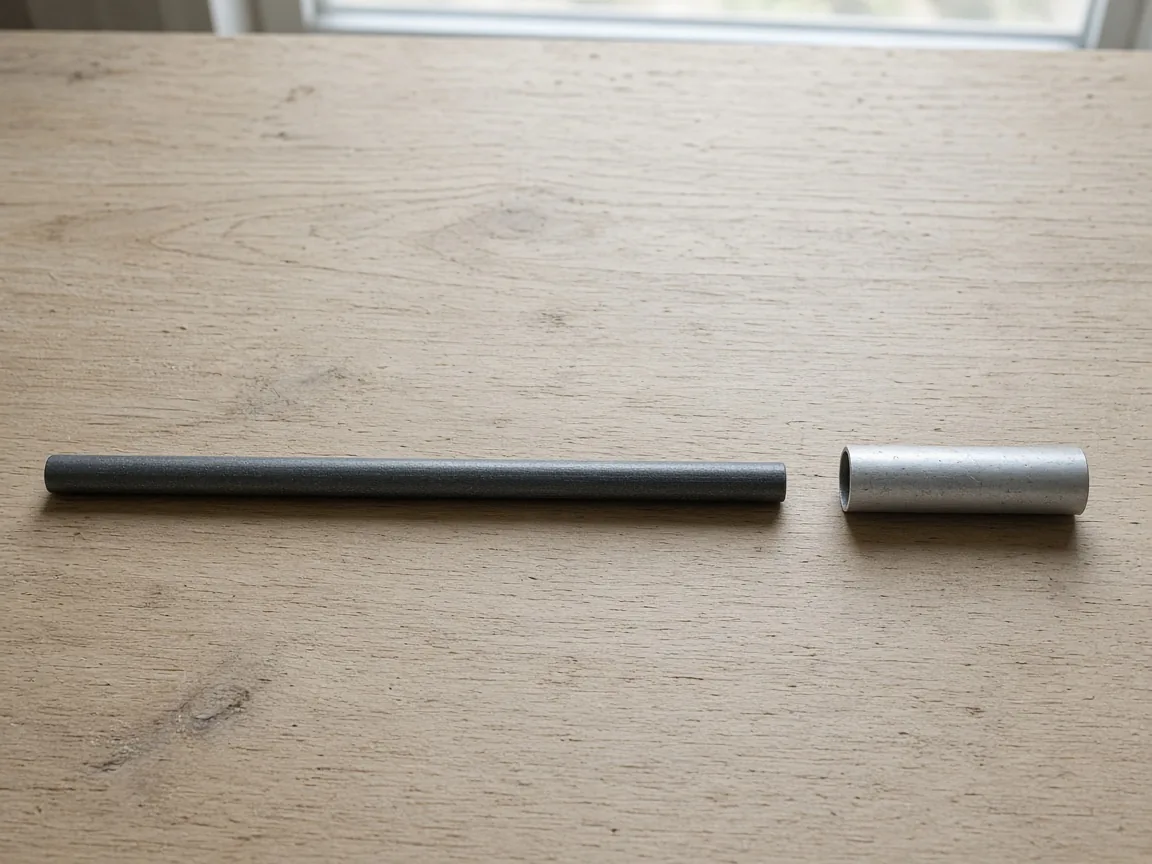
| Short joint in a sleeve, or a sleeve the rod slides over | Ferrule | Prism’s booklet, for leading edges. When those wings are folded, the booklet says to check that the ferrule is still glued and that about 2 to 2.5 inches of it is exposed. | That exposure is Prism’s storage check for those rods. It is not an order length for another brand. |
| Tip the sail pulls against at the wing | Wingtip nock | Prism’s booklet shows internal, external, and insert styles. A broken nock shows up as a wrinkle at the lower spreader. | The style, or missing |
| Black rubber tip on a Hawk kite | Tail spar, female wing spar with brass ferrule, or male wing spar | Peregrine Hawk’s spar page only. The page says the rubber tips often stay in the pocket when the rod comes out. | Which of the three names, and whether the old tip is still in the pocket |
Takeaway: A ferrule, a nock, and a rubber tip are their own lines. Ordering “a spar” without that line sends the wrong piece.
What do you record before you order?
Copy one row. Leave unknown cells as missing.
| Field | What to write | If you cannot tell |
|---|---|---|
| Maker and model | The name on the sail or the original sheet | missing |
| Rod | One name from the table above | missing |
| Side | Left or right, checked against the intact side | missing |
| Connector | Ferrule (internal or external), nock, rubber tip, brass ferrule, or none | missing |
| Length | The length of the original piece you still have | missing |
| Diameter | The diameter of the original piece you still have | missing |
| Material | The material printed on the rod or on the maker’s sheet | missing |
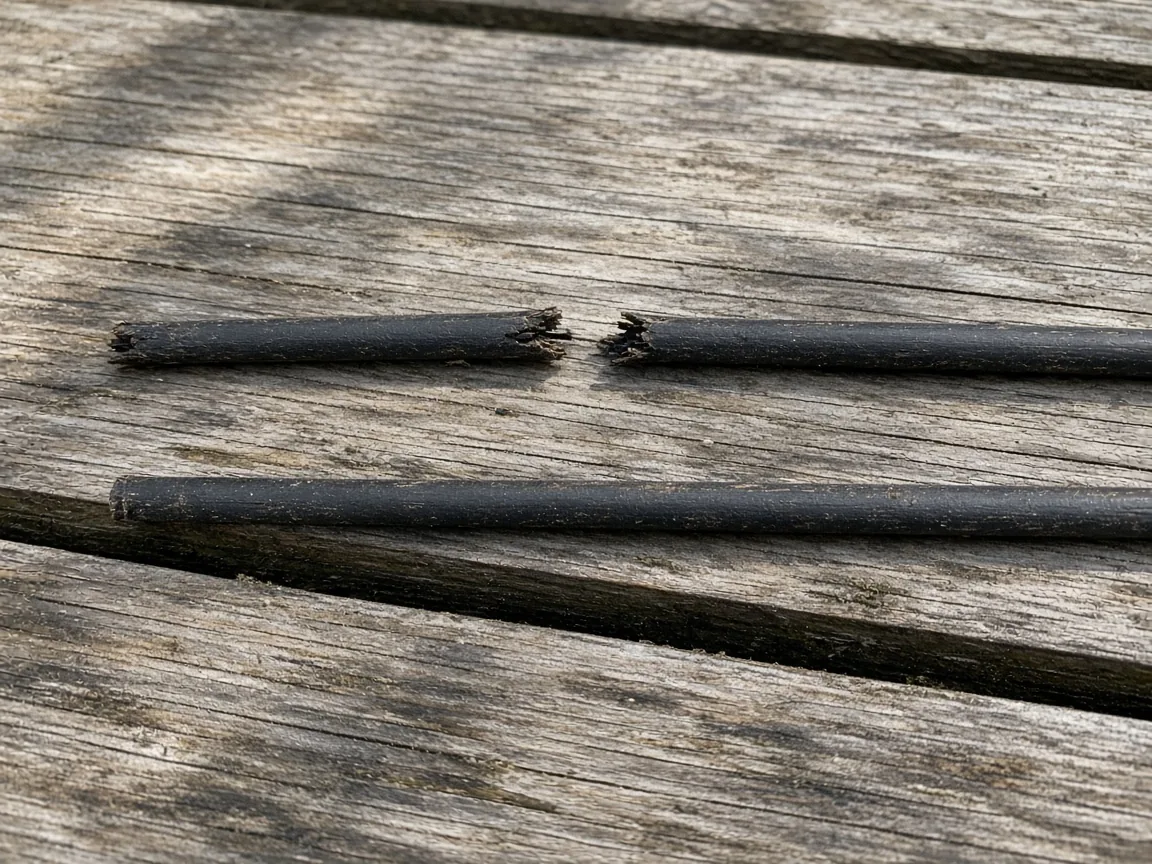
Use the intact rod as the pattern for the side, the fittings, and the bridle path. Prism’s wing-spar steps say the elbow fitting and the bridle have to match the other side of that kite. Prism’s booklet also warns that a broken carbon or fiberglass rod can leave splinters if a hand slides along it. Hold the broken piece by a sound section while you write the fields down.
Takeaway: Measure the original piece you still have. An empty cell stays missing.
What if the maker publishes no size?
The empty cell stays missing. A measurement taken along the sail is not a spar length. A listing from another brand is not your model. A number printed in a catalog does not become a stiffness or a wind-speed rating. This page supplies no diameters of its own.
Does another material fit when the length matches?
Length is one field on the checklist. It does not choose the material.
Into The Wind’s repair page, fetched 11 October 2026, compares a wood dowel with other rods and says the swap changes the kite. Solid fiberglass of the same diameter is four times heavier than that wood dowel, more flexible, and harder on the spar pocket. The page says that weight change can change the wind range. Fiberglass tubing is stiffer and lighter than solid fiberglass. The page says tubing and wood of the same diameter weigh about the same, and that tubing is generally sold in shorter lengths, so a ferrule comes into the job when that tubing is shorter than the wood spar it replaces. Graphite is lighter and stiffer than similarly sized fiberglass. The page says graphite is generally smaller in diameter and shorter than wood dowels and fiberglass rods, and it ties that smaller diameter to a harder substitution, especially in place of a wood dowel.
This page does not swap carbon in for fiberglass because two rods share a length. If the maker names no substitute for your model, the material line stays “original” or missing.
Takeaway: Same length, different material, is a different part. Wait for the maker to name a substitute.
When you stop
A foil has no rods, so this checklist has nothing to order. That boundary sits on the stunt kite parts page linked above.
A torn sleeve, or a rod poking through the nose, is a sail problem. Prism’s booklet treats a spine or a leading-edge rod through the nose as a sail to send in. Cloth repair, and the booklet’s cutting, gluing, and splint steps, stay out of this page.
How this page was checked
Part names, the 2 to 2.5 inch ferrule check, the three-times note on female lower spreaders, the Hawk order words, and the wood-to-fiberglass comparison come from the three sources at the bottom, fetched 11 October 2026. The Prism booklet’s original print date was not in the text we read. Nobody flew a kite for this page. Prices are left out. Where a public size was absent, the checklist says missing.
Frequently Asked Questions
What if both sides are broken?
Write the side as missing. Prism's field-repair booklet uses the intact wing as the pattern for the elbow fitting and the bridle. With no intact side, that pattern is missing, and a length from a different kite does not fill it.
References & Sources
- Don't Panic! The kite pilot's guide to field repairs (frame diagram and frame repairs) — Prism Designs
- Kite Repair Instructions, Replacing Wood Spars with Fiberglass or Graphite Spars — Into The Wind
- Spar Replacement — Peregrine Hawk Kites