Flying a light carbon frame past the speed printed for a heavier fiberglass kite damages the spar. NASA says the lift force has to be greater than the kite’s weight, and that the velocity of the air going past the kite is the main factor in that lift. Frame material changes the weight. It does not replace the maker’s wind band.
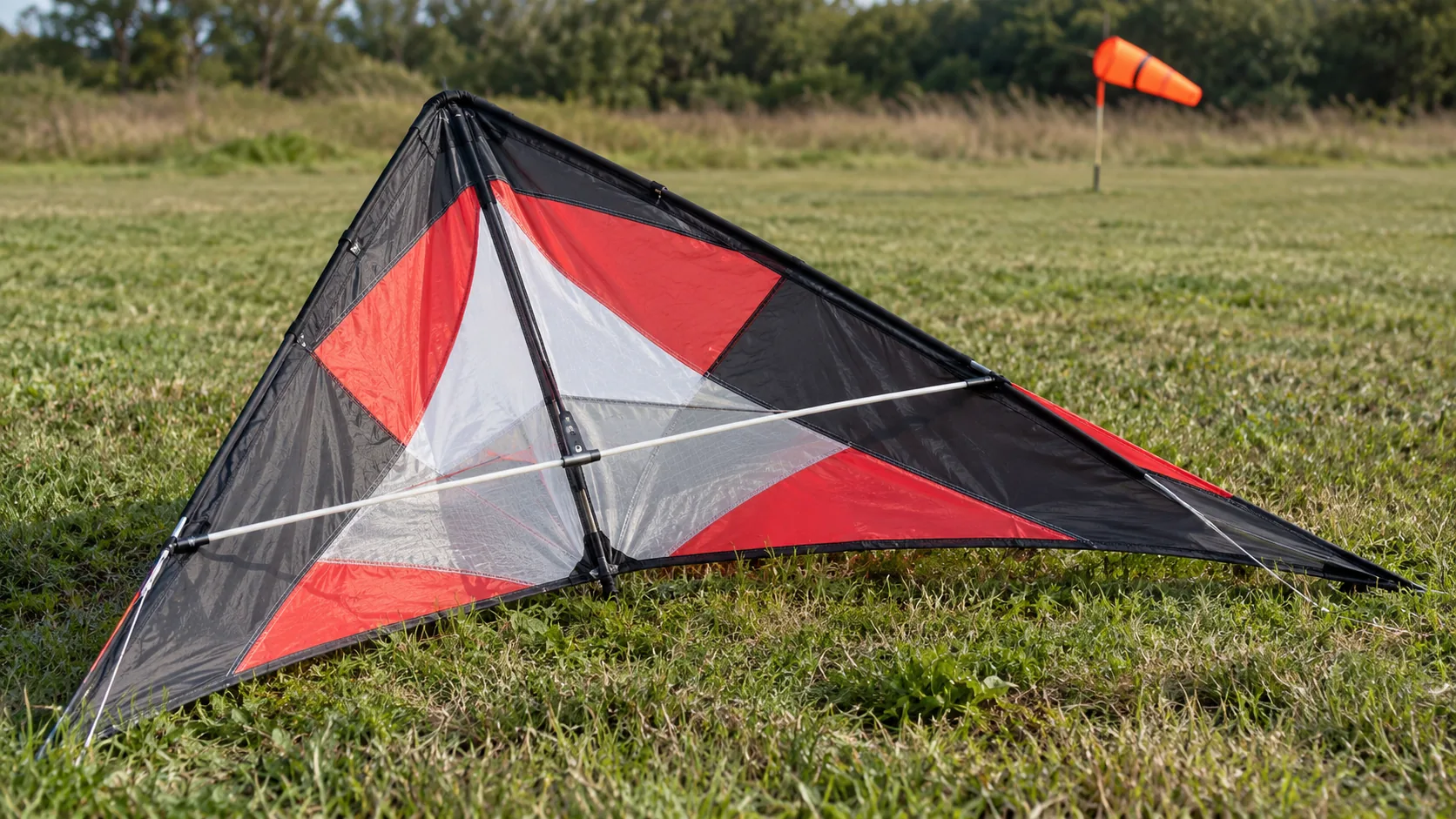
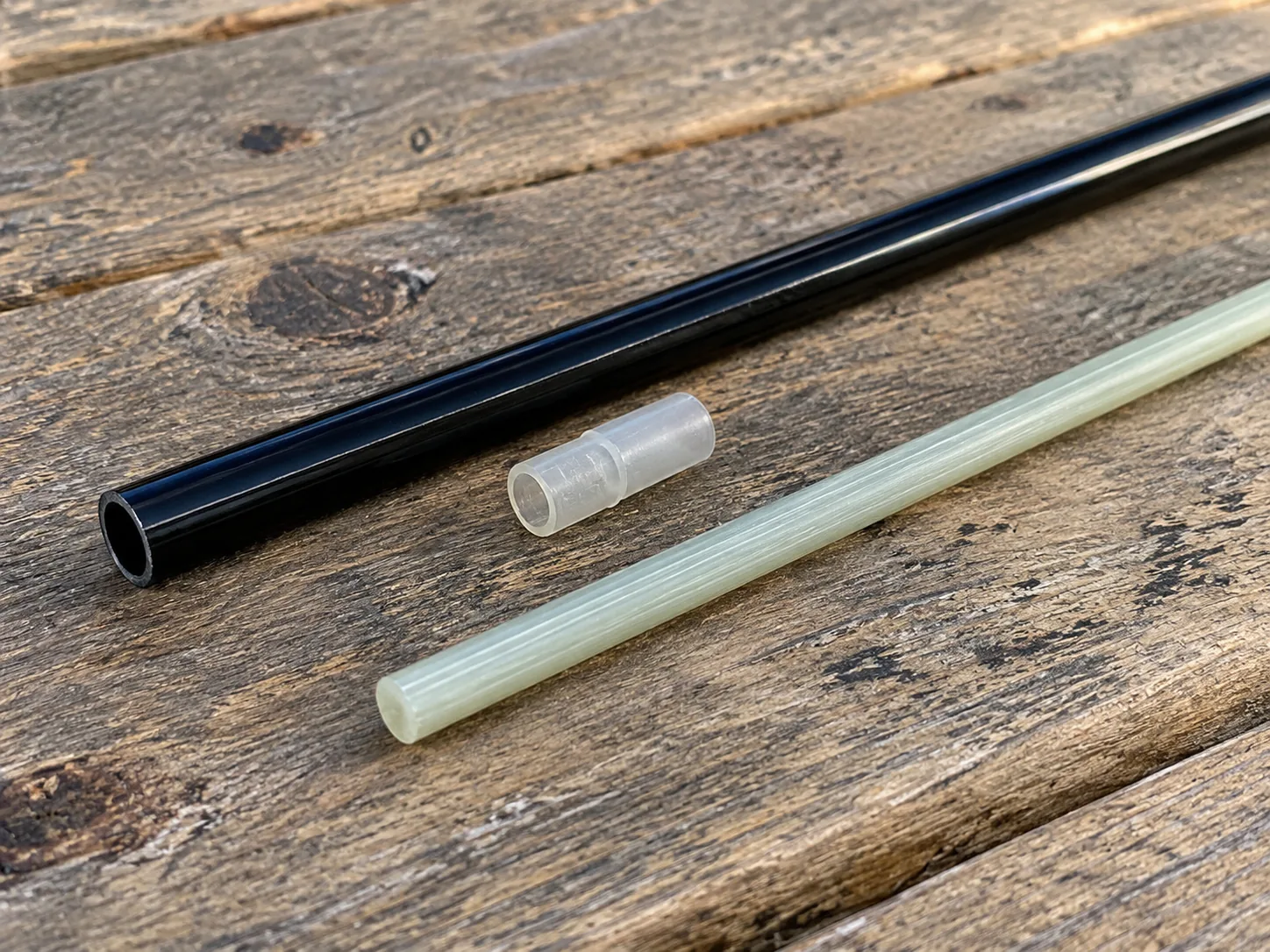
The photographs show generic spars and a kite on grass. They are not a measurement of wind, spar diameter or strength.
This page uses four public sources fetched on 20 October 2026. The wind chart by kite type already lines up published ranges for many models. Here the question is what the frame changes inside those ranges.
What the frame changes, and what it does not
NASA’s kite page says launch needs lift greater than weight. Relative velocity can come from the wind or from you pulling the kite through the air. A lighter kite needs less lift to leave the ground, so it can launch at a lower relative speed. Leading Edge Kites, an Australian stunt-kite maker, says the same thing in shop language: carbon graphite is lighter than fiberglass, so stunt kites with carbon frames, such as their Fluid, get up and flying in lighter winds than fiberglass-framed kites.
That sentence is about the bottom of the range. The same page is blunt about the top. Wind that is too strong is when you break stuff: lines break, rods break even in the air, sails stretch and rip. They decline to name a universal “too strong,” because it depends on the kite, the flyer and the site.
Frameless foils sit on the other side of the weight story. Leading Edge notes that foils have no frames and are very light, yet they need more wind because the cells have to fill to hold the shape. Less structure is not automatically a light-wind kite.
| Frame | What changes the bottom of the range | Dominant failure mode and prevention |
|---|---|---|
| Fiberglass spar, as on the HQ Ecoline Quick (3 mm) | Heavier than carbon for a similar stunt kite, so it needs more relative speed to exceed its weight | Too little wind: the kite lifts and then fails to turn. Too much: rods break and the sail stretches. Prevention: stay inside the printed band and stop when the gust passes the top. |
| Carbon or carbon-graphite spar | Leading Edge: lighter, so it launches in less wind than fiberglass | Treating the easier launch as permission to stay out after the gust exceeds that kite’s own top. Prevention: read the carbon kite’s range, not the fiberglass kite’s. |
| No spar (foil / parafoil) | Cells must inflate. Light weight does not remove that requirement | Flying in wind too light to hold the shape, or in wind strong enough to overload the lines. Prevention: use the foil’s printed range. Leading Edge says most of their stunt kites, as a group, perform in about 10 to 35 km/h (their figure of about 6 to 20 knots). That group sentence is not a foil rating. |
Rule of thumb: If the gust exceeds the published top, stop, even when the sustained wind is inside the band and even when the frame is carbon. For the HQ Ecoline Quick the published top in miles per hour is 24.
Takeaway: Use frame material to explain the bottom of the range. Use the printed top, including gusts, to decide whether to fly.
One fiberglass kite with a printed band
Invento’s product page for the Ecoline Quick Rainbow lists the frame as 3 mm fiberglass, the sail as polyester, the span as 115 cm, and the wind as 2-5 Bft (11-38 km/h, 7-24 mph). Lines included are polyester, 17 kp, two times 30 m. Age is listed as 8+. Those are the maker’s figures for that model, fetched 20 October 2026.
The National Weather Service Miami Beaufort table, fetched the same day, puts Force 2 at 4-7 mph, Force 3 at 8-12 mph, Force 4 at 13-18 mph and Force 5 at 19-24 mph. Force 3 is the breeze that keeps leaves and small twigs in motion and holds a light flag out. The HQ line pairs “2-5 Bft” with “7-24 mph.” On the NWS table, 7 mph is the top of Force 2, and 24 mph is the top of Force 5. When a maker prints both a Beaufort pair and a miles-per-hour pair, plan with the miles-per-hour pair you will actually compare to a forecast, and treat a mismatch as the maker’s wording rather than a second rating. The type-by-type wind chart already flags this pattern on other HQ pages.
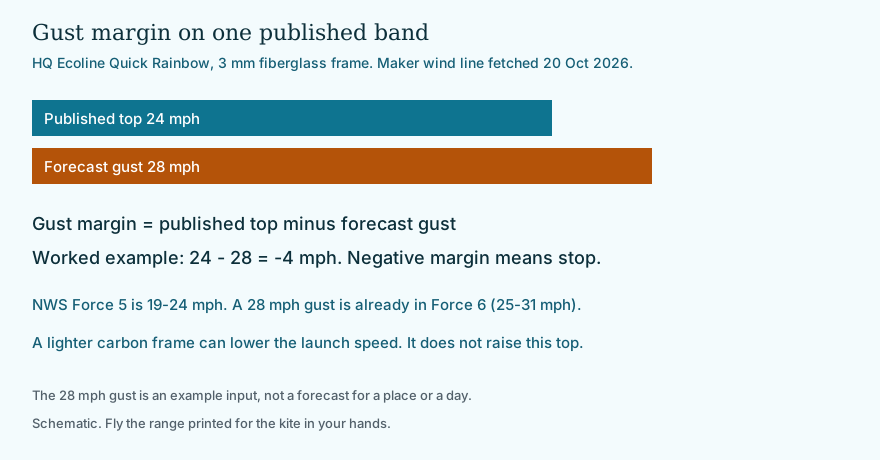
Formula. Gust margin = published top speed minus forecast gust speed.
Worked example. Published top = 24 mph. Forecast gust = 28 mph. Gust margin = 24 - 28 = -4 mph. A negative margin means the gust is outside the printed band, so this fiberglass kite stays in the bag. The 28 mph figure is an example input, not a forecast. NWS Force 6 starts at 25 mph, so 28 mph is already in the next band above the printed top.
Why “a bit more wind” loads the frame harder
NASA does not print a breaking load for a spar. It does say the size of the lift depends above all on relative velocity, and that pulling the line slightly raises that velocity and the lift. Leading Edge’s failure description is the practical end of the same relationship: more speed, more pull, then rods and lines fail.
A carbon spar that launches earlier still meets that rising load. If the carbon kite’s own page stops at a lower top than a vented or foil design, the earlier launch does not extend the afternoon. The spar replacement checklist is what you use after a spar does break: match the rod, the side and the connector, instead of guessing a length. Sail damage from that same overload is a different repair, covered in how sail tears are patched.
Where this stops
No frame material on this page has a universal miles-per-hour rating. Leading Edge’s 10 to 35 km/h line is their description of most stunt kites as a group, and they tell you to read the instructions that came with the particular kite. HQ’s 7-24 mph line belongs to the Ecoline Quick Rainbow, a 3 mm fiberglass model, not to every fiberglass kite.
Obstacles matter before the number does. Leading Edge says to fly in open space, well away from trees, buildings and hills, and that obstacles within 50 m disturb the steady flow a kite needs. A forecast inside the band, measured in a clear fetch, is a different wind from the same forecast beside a tree line.
Takeaway: Look up the frame only to understand why two kites launch at different speeds. Carry the printed top, and the gust, into the field.
Frequently Asked Questions
Is there one ideal wind speed for every kite frame?
No. NASA says lift has to exceed the kite's weight and that relative airspeed is the main driver of lift. A lighter frame can therefore fly in less wind. The upper limit is the range the maker prints for that kite, because excess wind breaks rods, lines and sails.
Does a carbon frame mean I can fly in stronger wind?
Not from the sources on this page. Leading Edge Kites says carbon is lighter than fiberglass, so carbon-framed stunt kites get flying in lighter wind. The same page says strong wind is when rods break. A lighter launch does not move the published top.
What wind does a 3 mm fiberglass stunt kite use?
Use the page for that kite. Invento's HQ Ecoline Quick Rainbow, frame listed as 3 mm fiberglass, prints Wind: 2-5 Bft (11-38 km/h, 7-24 mph). Compare the gust with 24 mph before you treat a moderate forecast as safe for that model.
References & Sources
- Ecoline Quick Rainbow Kite 115 cm — Invento / HQ
- How to fly Stunt Kites — Leading Edge Kites
- Kite Launch and Flight — NASA Glenn Research Center
- Beaufort Wind Scale — National Weather Service, Miami