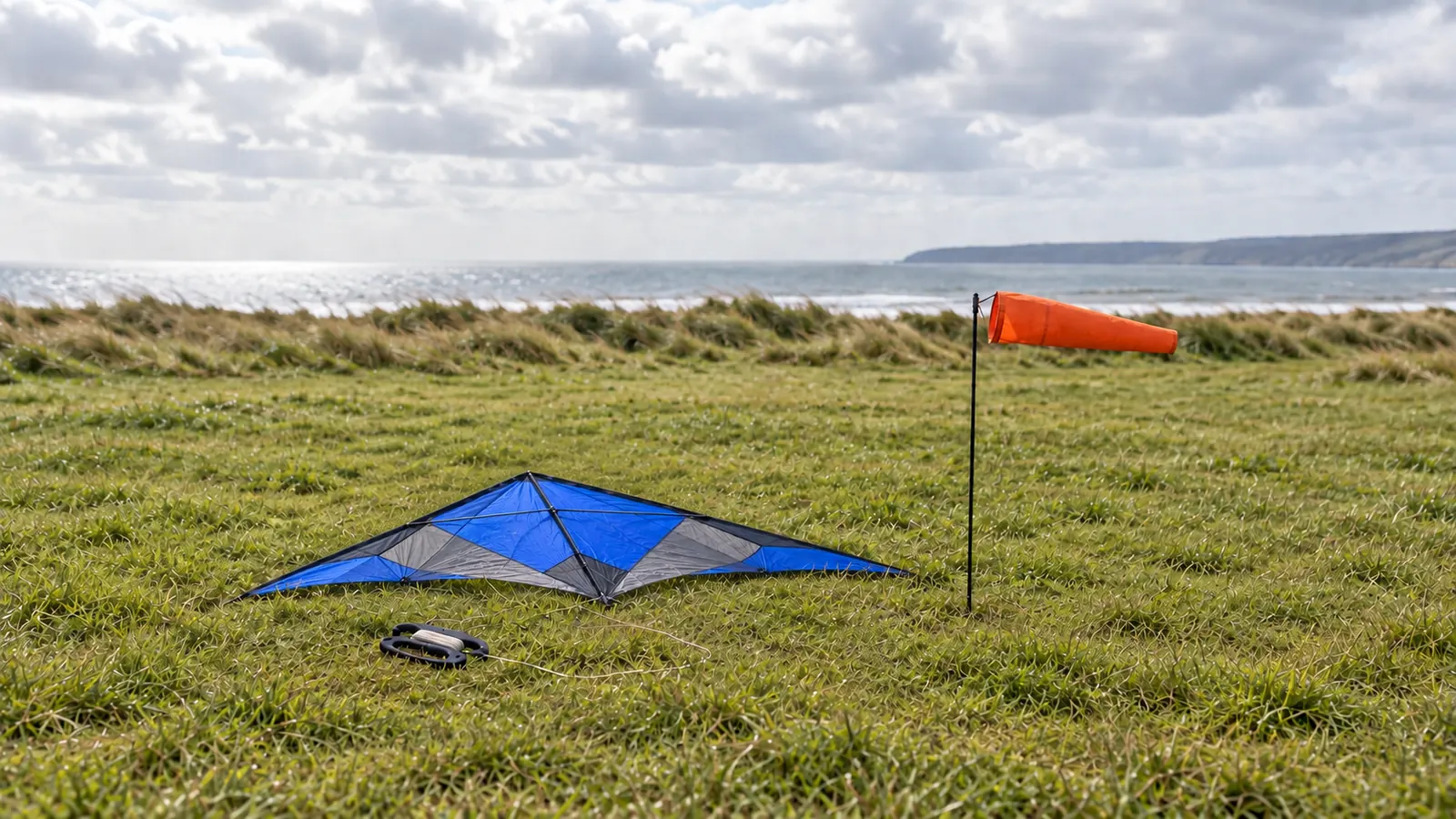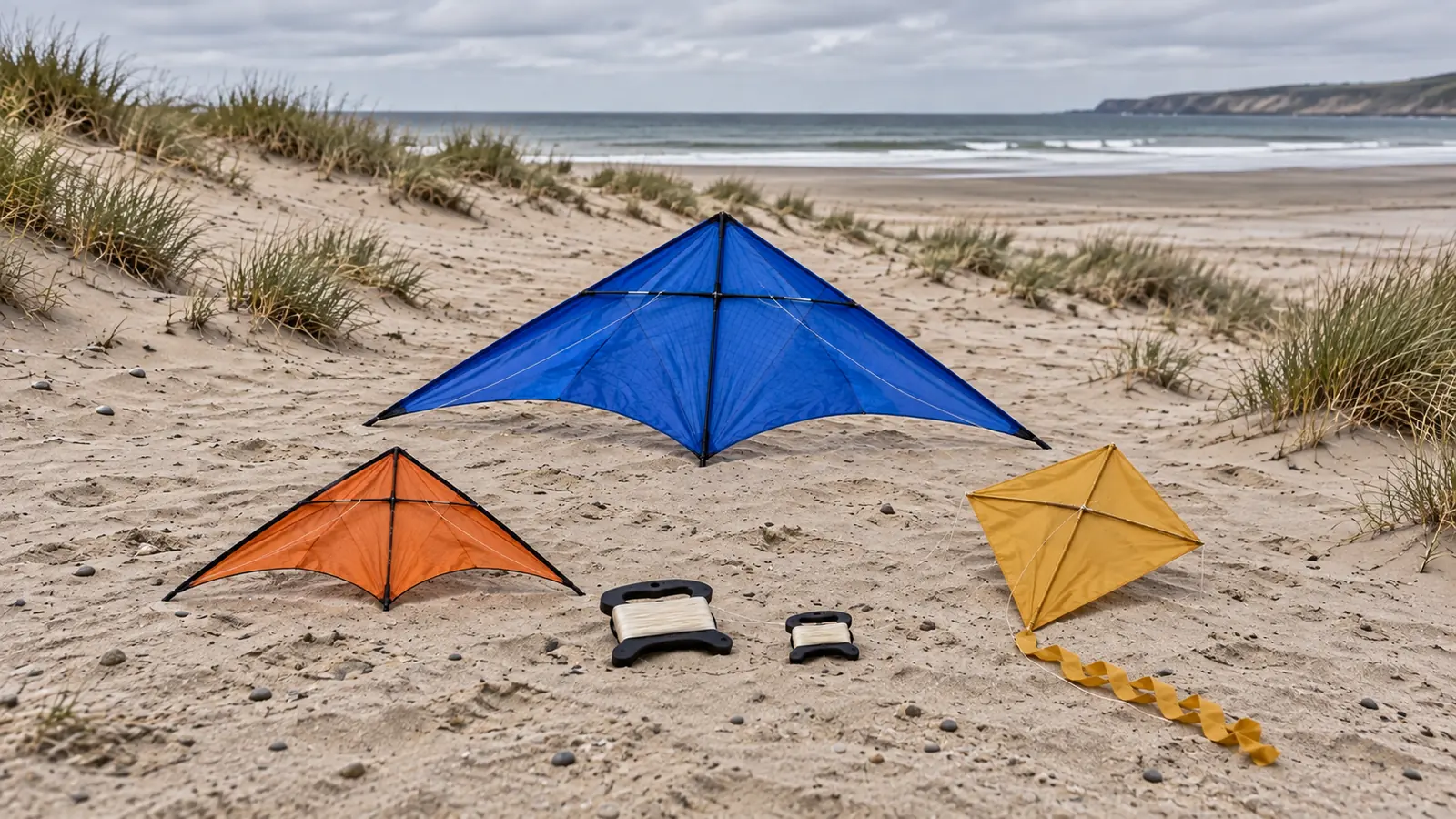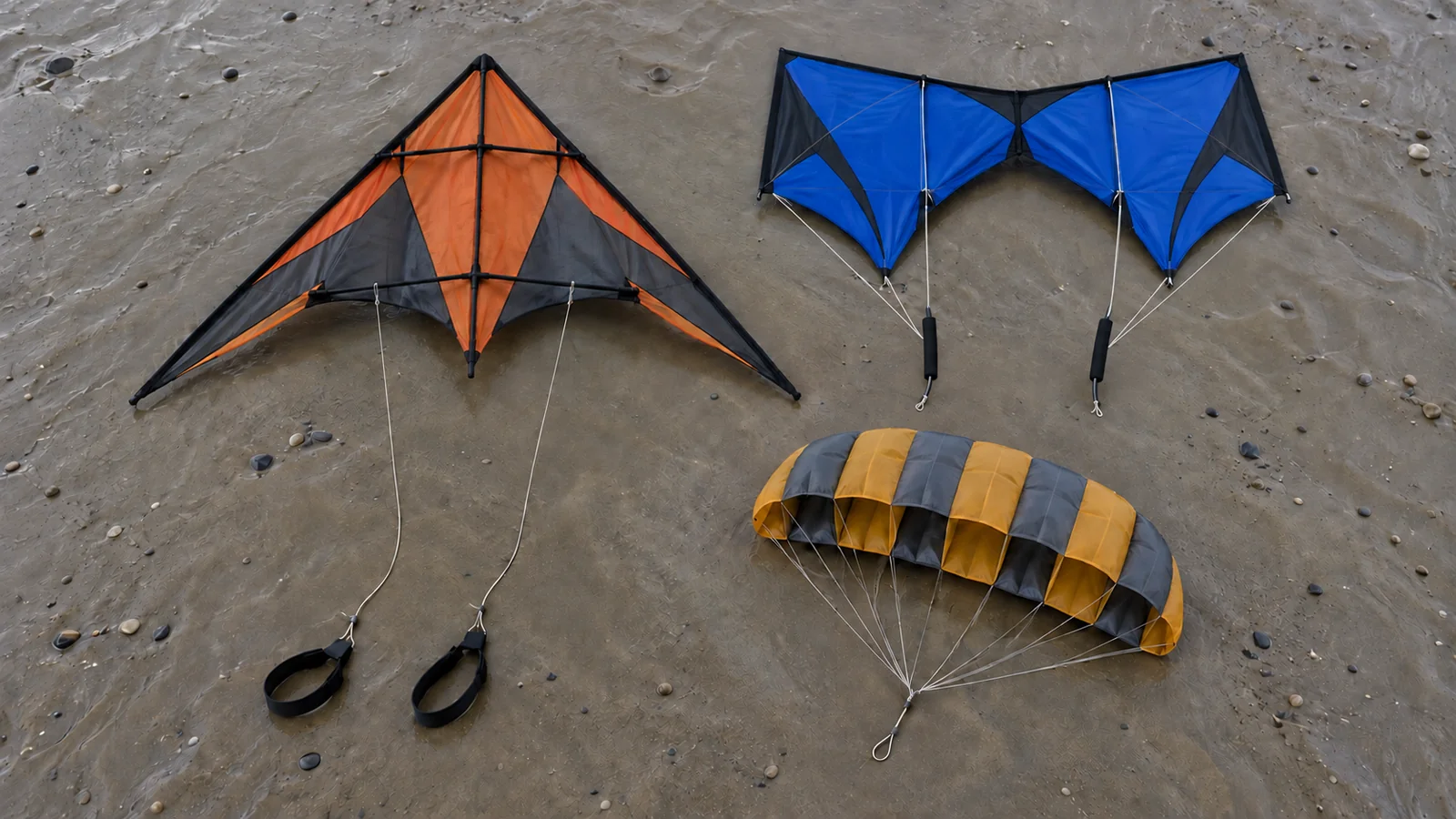
Picking the wrong number of lines wastes a season of practice: a dual-line kite cannot hover or reverse the way a quad-line kite does, and a quad-line kite asks for patience before it does anything gracefully. A stunt kite is any kite you steer with two or more lines; choose dual-line for speed, loops and simple controls, quad-line for reverse flight, hovering and precise placement, and a dual-line foil if you want pull and no rods to break.
This is a comparison built from makers’ published specifications and an encyclopedia description of sport kites, not a test of our own. A dual-line kite turns when you pull one line harder than the other; a quad-line kite adds a second line to each hand so you can tilt the wing, stop it and fly it in reverse. Recreational single line kites are not stunt kites, and power kites are a related, pull-focused family that is also steered with several lines. The tables below line the types up on the same factors: lines, controls, moves, frames, sails and published wind ranges.
Quick specs: what to compare before you choose
| Input or item | Typical value or source | Why it matters |
|---|---|---|
| Number of lines | 2 (dual-line) or 4 (quad-line); 1 means it is not a stunt kite | Sets which moves are possible |
| Controls | Straps or spool handles (dual-line); two handles with two lines each (quad-line) | Decides how much each hand has to do |
| Published wind range | Maker listing, e.g. HQ Ecoline Quick 2–5 Bft; Revolution Reflex EXP 6–18 mph | Must cover the wind you usually fly in |
| Line set | Listing, e.g. 2 × 25 m, 20 kp (HQ Rookie); 4 × 80 ft, 90 lb (Revolution) | Sets the strength and the length of field you need |
| Frame | Fibreglass (entry dual-line), carbon (quad-line, sport), none (foil) | Weight, stiffness and what breaks in a crash |
| Sail | Ripstop polyester (Icarex on several Revolution models) or ripstop nylon (Revolution Reflex EXP) | Stretch versus tear resistance |
| Age label | Listing (HQ Ecoline Rookie and Quick 8+; Symphony Beach III 2.2 14+) | A maker’s label per model |
What is a stunt kite?
A stunt kite, also called a sport kite, is a multi-line kite that can be steered through the air. Two-line and four-line setups are the common configurations. The encyclopedia entry on sport kites draws two boundaries: fighter kites, which do tricks on a single line by relying on instability, are generally treated as a separate category, and power kites are close relatives built to generate significant pull for activities such as kite buggying and kite surfing.
That makes the definition simple to apply in a shop. Count the lines. A kite with one line is a single line kite, however acrobatic its decoration looks; our guide to single line kite types covers that family. A kite steered with two or four lines belongs to the stunt or sport family, with power kites overlapping it, and the question becomes what you want it to do.
Takeaway: Count the lines first; the line count tells you more about a kite than its name or shape.
Single, dual, quad and power kites side by side
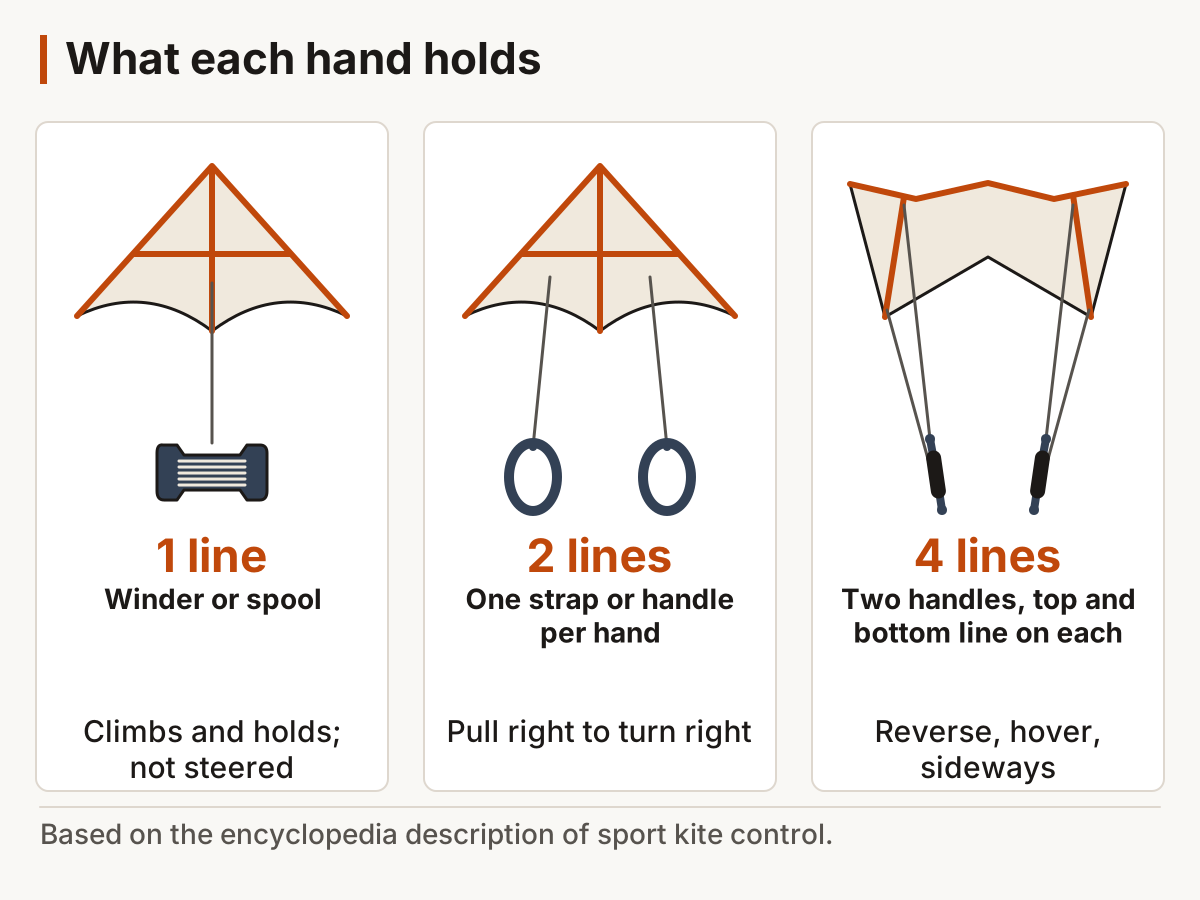
The line count, what each hand holds and what the kite can do separate the five options below; they are compared on the same factors. Example wind ranges come from makers’ product pages and apply to those models only; the one-line row is covered in depth in our single line kite comparison.
| Type | Lines and handles | How you steer | What it can do | Typical frame | Example published wind range |
|---|---|---|---|---|---|
| Recreational single line kite (for contrast) | 1 line, winder or spool | Let line out, pull in, walk | Climbs and holds a position; not steered (fighter kites are an exception) | Fibreglass, carbon or frameless | HQ Delta Stern: 2–5 Bft |
| Dual-line framed kite | 2 lines, straps or spool handles | Pull one line harder to turn | Speed, loops, dives, landings; tricks on modern designs | Fibreglass (entry), carbon (sport) | HQ Ecoline Quick: 2–5 Bft |
| Dual-line foil | 2 lines, straps or a control bar | Same as dual-line framed | Steering plus noticeable pull; no rods | None; wind inflates the cells | HQ Symphony Beach III 1.3: 2–6 Bft |
| Quad-line kite | 4 lines, two handles | Tilt the handles to change wing angle | Forward and reverse flight, hovering, sideways flight, spins | Carbon | Revolution Reflex EXP: 6–18 mph |
| Power or traction kite | 2 for trainers; 4 on large kites; some add a third or fifth safety line | Bar or handles | Pulls a person on a board or buggy | Not compared here | Not compared here |
Power kites sit at the edge of this comparison. The encyclopedia entry describes small dual-line “trainers” at one end and large four-line traction kites at the other, many with a safety strap that releases or depowers the kite and some with an extra third or fifth line for that job. If pull is the main attraction, start with a small trainer-size foil; the larger traction kites are a separate sport.
Takeaway: Dual-line framed kites are the common entry point; foils trade rods for pull, and quad-lines trade simplicity for control.
2-line vs 4-line: how the controls differ
The difference is what each hand can do. On a dual-line kite, each hand holds one line. On a quad-line kite, each hand holds a handle with two lines, one to the top and one to the bottom of the wing on that side.
| Factor | Dual-line (2 lines) | Quad-line (4 lines) |
|---|---|---|
| Turning | Pull the right line to go right, the left to go left | Tilt one handle relative to the other |
| Speed and pitch | Walk forward or back to change line tension | Tilt handles back or forward to change the wing’s angle |
| Reverse flight | Difficult or impossible | Yes |
| Hovering in place | Can stall nearly motionless for a moment | Yes, holding a chosen orientation |
| Sideways flight | Difficult or impossible | Yes |
| What the maker or encyclopedia says | Turns, loops, landings and, on modern kites, slack-line tricks | Reverse, axis spins, hovers and side-to-side flight; Revolution’s Eagle page calls the control “a simple wrist rotation movement” |
The encyclopedia description of quad-line control explains why: the pilot keeps tension on all four lines and draws some back more than others, so the kite can be tilted, rotated, twisted or pitched in any direction. Revolution, whose 1988 design re-popularised quad-line kites according to the same entry, lists forward, reverse, spinning, sliding and hovering for its Reflex XX.
Common mistake: Buying a dual-line kite and expecting it to hover or back up. Controlled hovering and reverse flight are what quad-line kites are designed for, and the encyclopedia entry calls them difficult or impossible on a dual-line kite. A dual-line kite can stall nearly motionless for a moment, which is not the same as a controlled hover.
Takeaway: If reverse flight and hovering are the point, go straight to four lines; if you want speed and loops, two lines are enough.
Stunt kite parts and what each one does
A framed dual-line stunt kite is a sail on a spine, leading edges and spreaders, held in shape by standoffs and connected to the lines by a bridle. The table follows that kite from nose to lines; quad-line kites are built differently and are not covered part by part here.
| Part | What it does |
|---|---|
| Sail | The fabric wing, usually ripstop polyester or ripstop nylon |
| Leading edge | The front edges of the wing; Revolution reinforces its sails with a “no fray” leading edge |
| Spine | The centre rod from nose to tail |
| Spreaders | Horizontal rods that hold the wings apart; some kites use several |
| Standoffs | Short rods that keep the sail in a 3D shape even when the lines go slack |
| Bridle | Short lines that join the flying lines to the frame and set the angle to the wind |
| Yo-yo stoppers | Small stops that catch the line during certain tricks |
| Ballast or tail weights | Weights that change stability, making some tricks easier |
| Vents | Mesh or open panels that let air through for stronger wind, as on Revolution’s vented sails |
| Lines and handles | Flying lines plus straps, spool handles or quad-line handles |
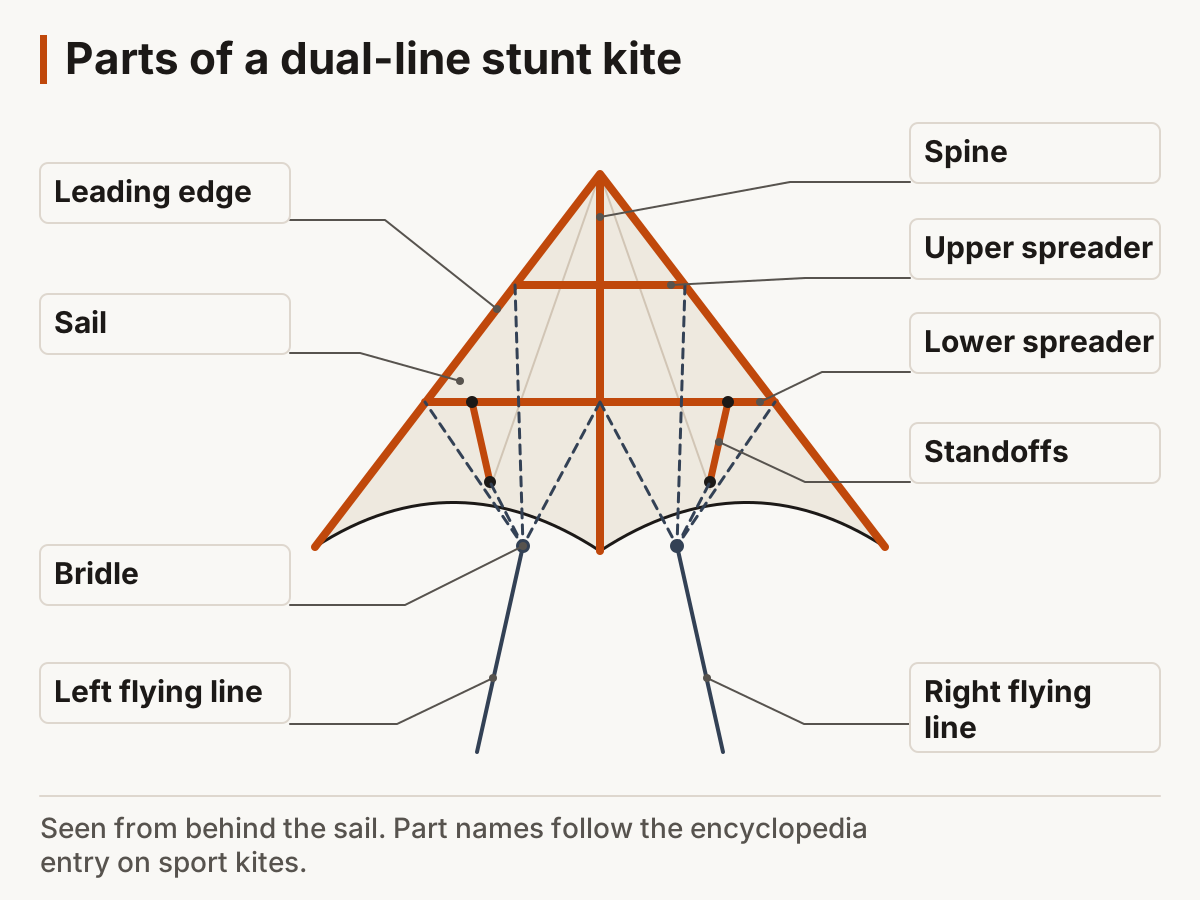
Standoffs are the feature that separates modern dual-line kites from older flat designs. According to the encyclopedia entry, they let the kite hold its shape while drifting backwards or lying on its back, which opened up the slack-line trick flying that modern kites are built for. Revolution ships its Reflex XX with a spare carbon rod “suitable for replacing broken vertical or outer leading edge shafts,” so on that kite those are the rods worth knowing how to swap.
Takeaway: Learn the names of the spine, spreaders, standoffs and bridle; they are the names used in set-up instructions and spare-part lists.
Sail and frame materials compared
Stunt kite materials balance weight, stiffness and toughness. The encyclopedia entry describes the professional recipe as a lightweight ripstop polyester sail treated to resist stretch, water and UV, reinforced edges, wrapped carbon-fibre tubes for the frame and ultra-high-molecular-weight polyethylene line such as Spectra or Dyneema, which stretches very little.
| Material | Where it shows up | Trade-off |
|---|---|---|
| Ripstop polyester (Icarex) | Revolution Reflex XX, Reflex RX and New York Minute sails | Distributor lists 12% (warp) and 18% (fill) elongation at break, and says low stretch makes sport kites more precise |
| Ripstop nylon | Revolution Reflex EXP, which the maker calls its most user-friendly and durable kite | Exact fabric not stated; for one kite nylon, Chikara, the distributor lists 49.3% and 51.2% elongation at break and a higher tear figure |
| Ripstop polyester (entry) | HQ Ecoline Rookie, Symphony Beach foils | Sold ready to fly with fibreglass rods or no rods |
| Carbon-fibre tubes | Revolution frames (5/16 in and 1/4 in) | Light and stiff, yet able to flex in a crash, per the encyclopedia entry |
| Fibreglass rods | HQ Ecoline Rookie (4 mm) and Quick (3 mm) | Used on these ready-to-fly beginner kits |
| UHMWPE line (Spectra, Dyneema) | Revolution 90 lb line sets; Dyneema on the HQ Symphony 2.2 | Minimal stretch under tension, per the encyclopedia entry |
| Polyester line | HQ Ecoline and Symphony 1.3 kits | Supplied with entry-level kits |
The two sail fabrics show the classic choice. Top Fabrics, which distributes both Icarex polyester and Chikara nylon, lists Icarex at 1.2 kg tear strength with 12% (warp) and 18% (fill) elongation at break, and Chikara at 5.0 kg with 49.3% and 51.2%; it does not state its test methods. The same distributor says polyester ripstop typically has less tear resistance than nylon but stretches less. Revolution’s split, nylon on its beginner model and Icarex on its precision models, is consistent with that description, though the maker does not explain its choice. Our ripstop fabric comparison covers the units, coatings and test methods behind those numbers.
Common mistake: Reading “carbon” as “unbreakable.” Carbon tubes are light and stiff, but the Revolution Reflex XX, Reflex RX and New York Minute all ship with a spare carbon rod “just in case you’re caught in big wind, or have a really good crash.”
Takeaway: Check that spare rods are sold for the model you choose; sail fabric becomes a deciding factor once precise flying matters to you.
How much wind each type needs
Published wind ranges for stunt kites run from almost nothing to a fresh breeze. The table compiles the models referred to in this guide. The encyclopedia entry adds a general figure: many standard sport kites fly best in winds of 1.5–6 m/s, about 3.4–13 mph, while ultralight designs fly in the slightest breeze and vented high-wind kites go up to about 20 m/s.
| Model (type) | As published by the maker | NWS mph for the Beaufort figure |
|---|---|---|
| Revolution Reflex XX (quad-line, light wind) | 0–12 mph headline; 0–14 mph in the same page’s comparison list | — |
| Revolution Eagle (quad-line, light wind) | “zero to about 14 mph” | — |
| Revolution Reflex RX (quad-line) | 4–15 mph | — |
| Revolution Reflex EXP (quad-line, beginner) | 6–18 mph | — |
| Revolution New York Minute, standard sail | 3–18 mph | — |
| Revolution New York Minute, extreme-vent sail | 8–25+ mph | — |
| HQ Ecoline Quick (dual-line framed) | 2–5 Bft (7–24 mph) | 4–24 |
| HQ Ecoline Rookie (dual-line framed) | 2–6 Bft (4–24 mph) | 4–31 |
| HQ Symphony Beach III 1.3 (dual-line foil) | 2–6 Bft (6–31 mph) | 4–31 |
| HQ Symphony Beach III 2.2 (dual-line foil) | 2–6 Bft (4–31 mph) | 4–31 |
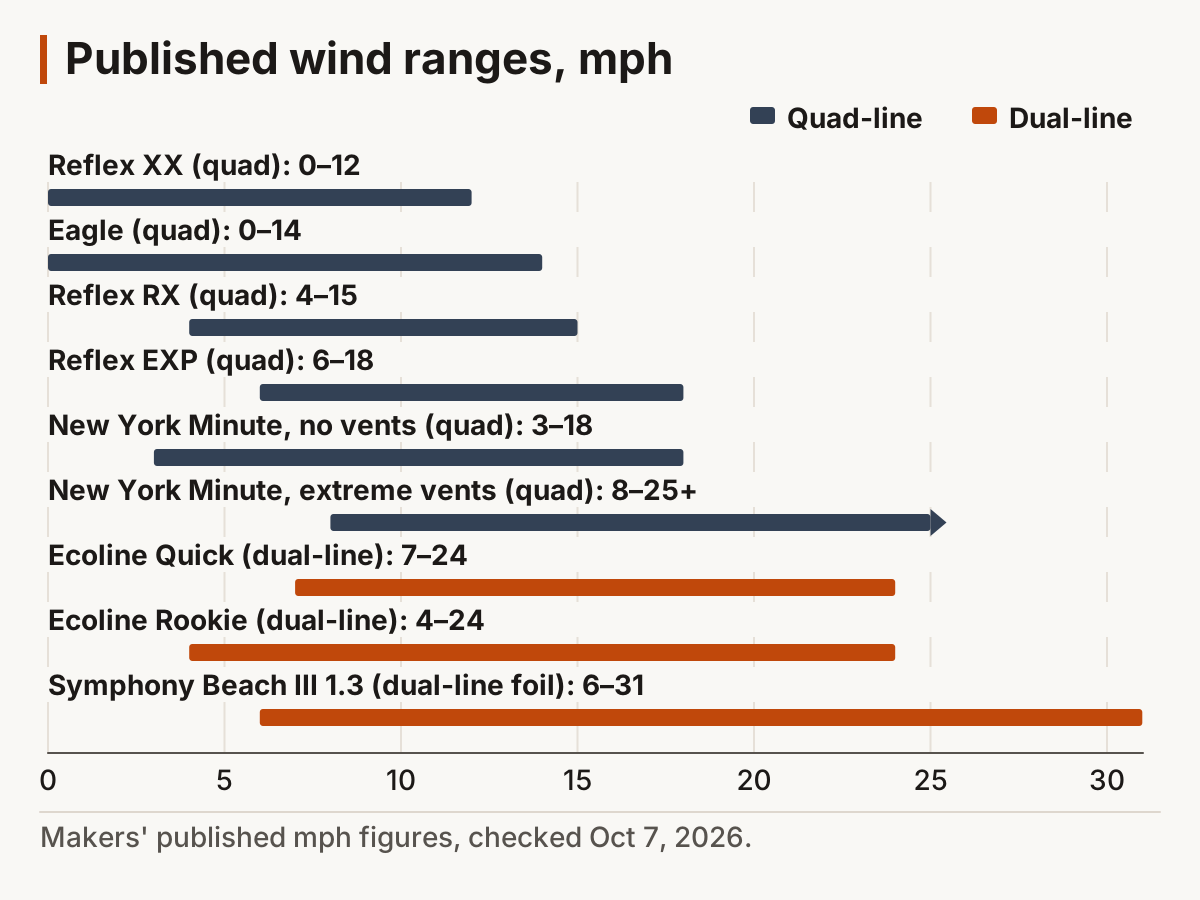
The NWS column converts HQ’s Beaufort figure; it is not a separate rating. Where a maker’s own mph figure is narrower, as for the Ecoline Rookie, plan around the narrower one until the maker confirms which is meant. Revolution’s vent options show how makers stretch a kite’s range: the New York Minute sail runs 3–18 mph with no vents, 4–20 mph with one vent per side, 6–22 mph with two and 8–25+ mph with three. In the maker’s words, the vents improve handling in higher winds “while sacrificing some light wind performance.” For converting forecast speeds into Beaufort force, use the kite wind speed chart, and check the field signs for too little or too much wind before unpacking.
Takeaway: Light-wind quad-lines start near zero, entry dual-lines start around Beaufort 2, and in this list the vented sail and the foils are the ones rated into stronger wind.
Which one to start with: a decision checklist
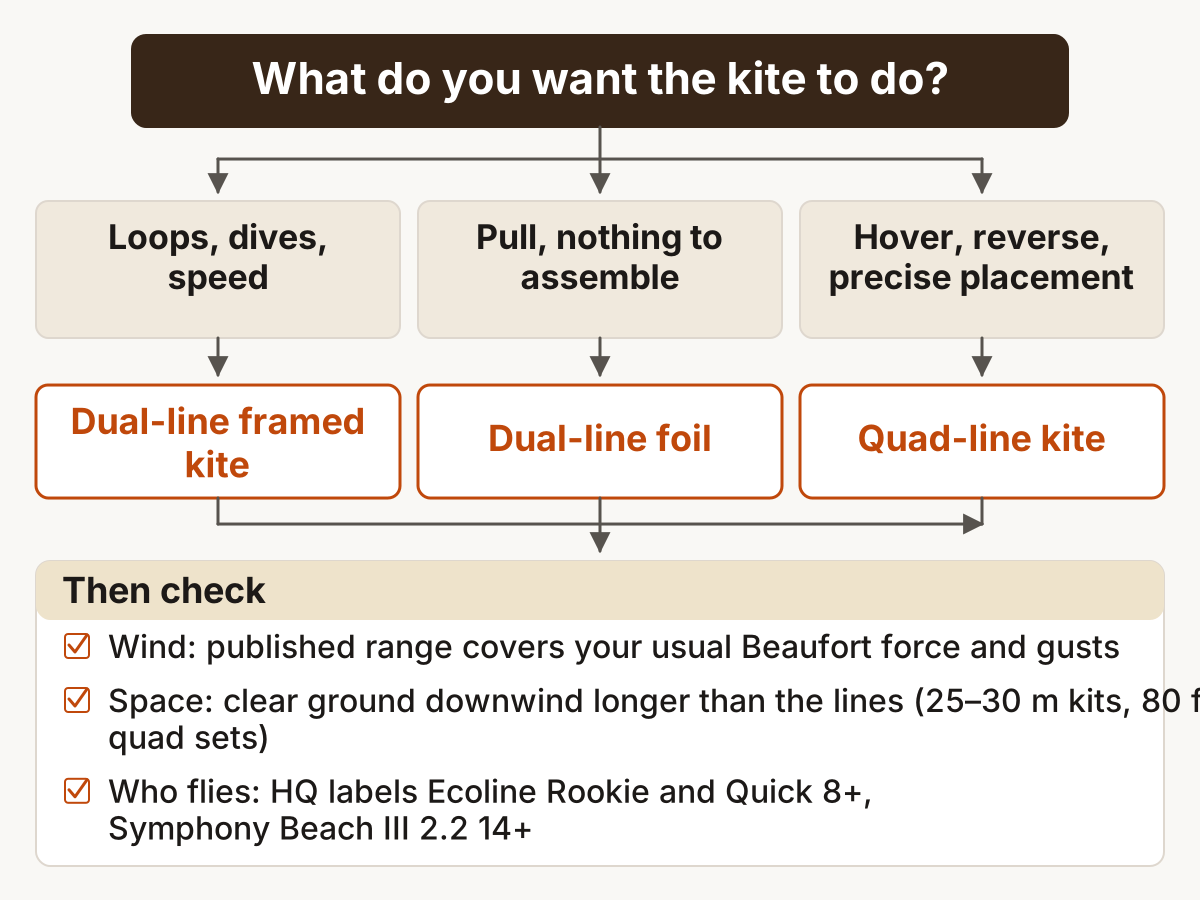
Start from what you want the kite to do, then filter by wind, space and who is flying.
- Want loops, dives and speed on a budget of effort? Choose a ready-to-fly dual-line framed kite. HQ sells its Ecoline range as “beginner stunt kites” with handles and lines included.
- Want pull and nothing to assemble? Choose a small dual-line foil. HQ describes its Symphony Beach III as designed for beginners, “tough and forgiving,” for “speed or pull,” with no parts to assemble or lose.
- Want to hover, reverse and place the kite precisely? Choose a beginner quad-line kite. Revolution designed its Reflex EXP for beginners with a 6–18 mph range.
- Check the wind. The kite’s published range must cover your usual Beaufort force and its gusts.
- Check the space. The HQ kits above come with 25–30 m (82–98 ft) lines and the Revolution sets with 80 ft lines, so you need clear ground downwind that is longer than the line; that is a minimum for geometry, not a full safety distance.
- Check who is flying. HQ labels its dual-line kits and small foil 8+ and its 220 cm foil 14+.
If you are buying for a child who has never flown anything, start with a single line kite or a small foil: our single line kite checklist sizes kites by age label and wind. The Kite Types section collects the rest of the type guides.
Takeaway: Pick the line count by the move you want, then let wind, field length and the age label narrow the model.
Safety: lines, space and people
Keep a stunt kite over empty ground, away from wires, roads and people, and stop flying when thunder starts. The NASA and NWS points below are official guidance; the others are our own practical suggestions.
- NASA’s kite safety page: fly in an open field or near the shore, never near trees, highways or houses, and never near high-tension wires, because a kite touching the lines can kill the person holding it.
- Wind: check the forecast gusts as well as the average against the model’s published range and instructions, using the Beaufort field signs.
- Thunderstorms: the NWS says there is no safe place outside when thunderstorms are near. “When Thunder Roars, Go Indoors” to a substantial building or hard-topped vehicle, and wait 30 minutes after the last lightning or thunder before going back out.
- Power kites (our suggestion): the encyclopedia entry notes that many have a safety strap that releases or depowers the kite; find it before launching and learn on a small trainer first.
- Lines (our suggestion): lay them out away from paths and wind them up when you finish, so nobody walks into them.
Takeaway: Give a stunt kite an empty downwind field longer than its lines, and get to a building or hard-topped vehicle when thunder starts.
When this does not apply
This comparison covers recreational dual-line and quad-line kites and small foils, not traction sports or indoor flying.
- Kite surfing, landboarding and buggying use traction kites with their own safety systems and training; this guide stops at trainer-size foils.
- Indoor and ultralight quad-line flying uses very light kites outside the ranges compared here.
- Children’s first kites are compared model by model, with age labels and line strengths, in the single line kite types guide.
- Published wind ranges are the makers’ figures under unstated conditions, and the encyclopedia entry stresses that pilot skill changes the usable range a great deal. Confirm with your own first sessions.
- Competition kites and team flying follow rule books from organisations such as the American Kitefliers Association, which this guide does not cover.
Takeaway: Treat the published ranges as starting points and confirm them in your own first sessions.
Related reading
- Single line kites: types and how to choose — Pick a one-line kite by wind, age label and size.
- Kite wind speed chart — Convert a forecast into Beaufort force and check it against field signs.
- Ripstop nylon for kites — Compare sail fabrics by weight, stretch, tear figures and coating.
- Materials and Care — Browse fabric and care guides.
Method and sources: how this comparison was put together
This is a selection comparison based on public information, not a test; nobody on this site flew these kites for this article. Wind ranges, sizes, line sets, materials and age labels come from Revolution Kites’ and HQ’s (Invento’s) own product pages, quoted as the makers publish them, including Revolution’s two different ranges for the Reflex XX on the same page. Control descriptions, part names and material descriptions come from the encyclopedia entry on sport kites. Fabric figures come from the distributor Top Fabrics. Beaufort conversions use the National Weather Service table. Official safety points come from NASA Glenn and the NWS; suggestions marked as ours are editorial advice. All sources were accessed on October 7, 2026, and are listed under References below. Prices are left out, and this site does not sell kites.
Frequently Asked Questions
What is a good stunt kite for a beginner?
Start with a type, not a brand. A ready-to-fly dual-line delta rated from Beaufort 2 has the fewest controls; a dual-line foil has no rods to break; a beginner quad-line kite teaches reverse flight and hovering. Makers label these for beginners, for example HQ's Ecoline range and Revolution's Reflex EXP.
Are stunt kites easy to fly?
Dual-line control is simple to describe: pull the right line to go right and the left line to go left. Quad-line kites ask more because each hand controls two lines. The encyclopedia entry on sport kites notes that novices can struggle to keep a kite up in wind where experienced pilots fly tricks, so expect early sessions to feel harder.
How do you fly a stunt kite?
On a dual-line kite you hold one line in each hand: equal tension flies it straight, pulling the right line turns it right and the left turns it left, and stepping forward or back changes line tension. Quad-line kites are steered by tilting two handles. For launching, follow your model's instructions; HQ includes set-up instructions and Revolution offers training videos.
Which stunt kite is the best?
No model is best for everyone, and this site does not rank kites. Choose the line count by what you want to do, then pick a model whose published wind range covers your usual wind and whose line set and age label suit the person flying it.
What are stunt kites used for?
Recreation and sport. People fly them for loops, tricks and precision patterns, and in organised competitions judged on compulsory figures and on ballet routines set to music, flown solo, in pairs or in teams. Pulling designs, called power kites, tow buggies and boards, and small dual-line trainers are used to learn.
Stunt kite vs parafoil: what is the difference?
A parafoil describes how a kite is built: a frameless fabric wing inflated by the wind. A stunt kite describes how it is controlled: with two or more lines. A dual-line foil such as HQ's Symphony Beach is both; a single line parafoil is not a stunt kite.
Can an 8 year old fly a stunt kite?
Some makers label beginner stunt kites for that age. HQ labels its Ecoline Rookie and Quick and its Symphony Beach III 1.3 foil 8+, and its flight school says children from 8 can learn to control its stunt kites. Its larger Symphony Beach III 2.2 foil is labelled 14+.
References & Sources
- Sport kite — Wikipedia
- Revolution Reflex XX (product page) — Revolution Kites
- New York Minute Quad Line Kite with Reflex (product page) — Revolution Kites
- Revolution Reflex EXP (product page) — Revolution Kites
- Revolution Reflex RX (product page) — Revolution Kites
- Revolution Eagle (product page) — Revolution Kites
- Ecoline Rookie (product page) — Invento / HQ
- Ecoline Quick (product page) — Invento / HQ
- Symphony Beach III 1.3 (product page) — Invento / HQ
- Symphony Beach III 2.2 (product page) — Invento / HQ
- HQ Flight School — Invento / HQ
- Icarex specifications — Top Fabrics (icarex.nl)
- Chikara specifications — Top Fabrics (chikaranylon.com)
- Beaufort Wind Scale — National Weather Service, Miami
- Kite Safety — NASA Glenn Research Center
- Lightning Safety Overview — National Weather Service