The wrong place for the flying line is the sail, a spar, or the tail. Use a Lark’s Head only on a pigtail that already ends in a knot, and only when there is no clip.
A video or a diamond-only stringing page still leaves a clip, a ring, and a missing fitting blank.
The flying line goes on the fitting the kite already has. Prism’s flying-basics page, fetched 11 October 2026, says a Lark’s Head knot can connect the flying line to the line attachment point on the bridle when there is no attachment clip, and that a pigtail can be bridle-weight line tied with an overhand knot. On the Synapse, that maker’s manual says the bridle lines should run clear and untwisted before each launch, and that uneven flying lines are checked within an inch. A clip or a ring stays blank. The knot wraps are in the maker’s figures, not in those sentences, so this page does not redraw them and does not give a breaking strength.
If you are replacing the flying line itself, first match the line material and specification to a single-line or dual-line kite, then return here to identify its connection.
What fitting is already on the kite?
Name the fitting before you tie anything. The flying line belongs on the bridle’s attachment point.
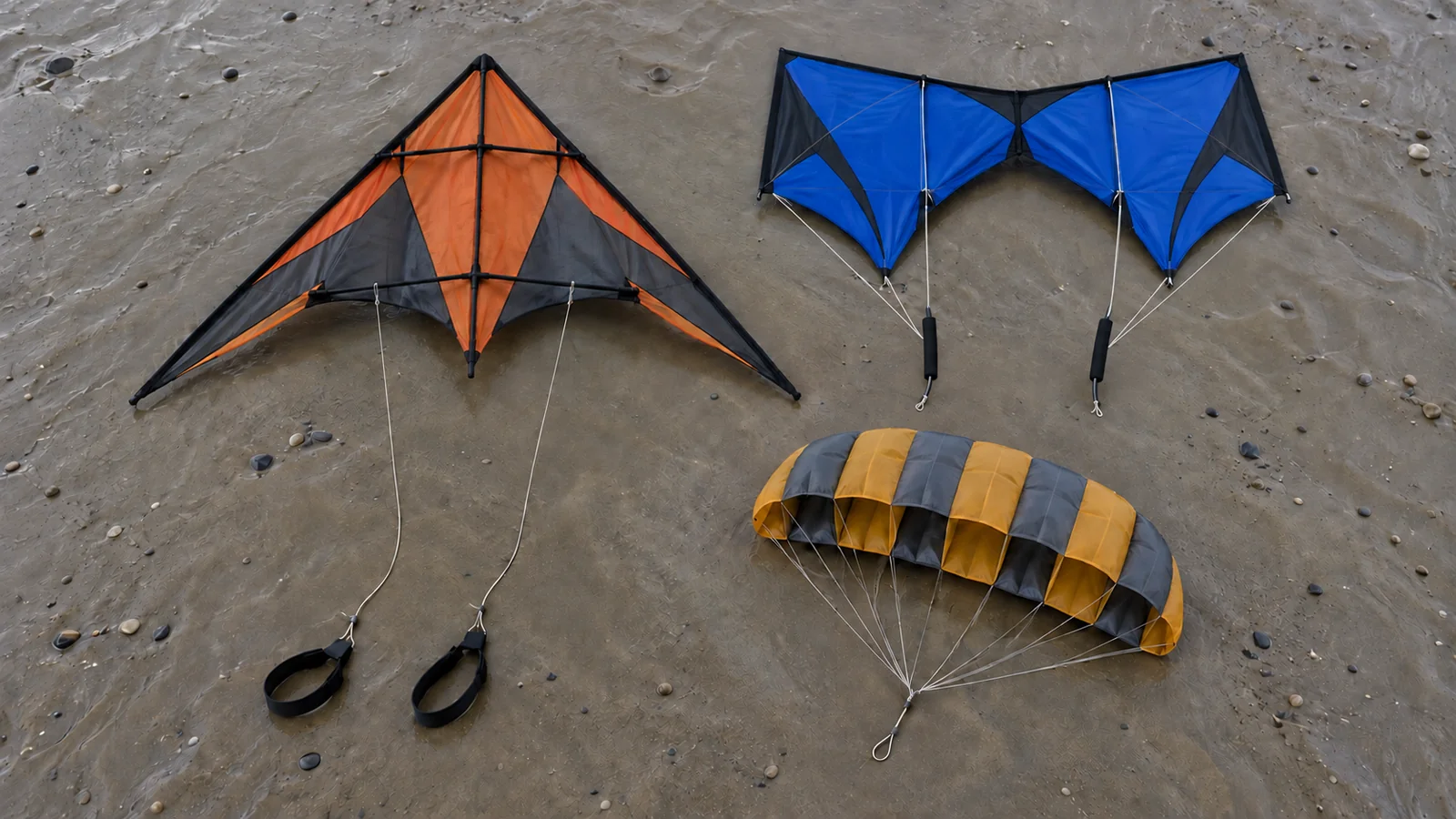
On a dual-line foil, Prism’s flying-basics page calls the bridle an assembly of lines sewn into the sail. That bridle holds the wing in shape and provides the attachment points for the control lines. On a framed dual-line kite, the part names sit on the stunt kite parts page: the bridle is the short lines that join the flying lines to the frame. This page does not repeat that parts list. It only sorts the fitting you are about to tie to.
| What you are holding | Name to write | Where that name is defined | What you do |
|---|---|---|---|
| Short loop of bridle-weight line finished with an overhand knot, and no clip | Pigtail | Prism flying basics, fetched 11 October 2026 | Lark’s Head connects the flying line to that loop |
| Short loop finished with a knot you cannot name | Pigtail, knot missing | Prism’s written homemade pigtail uses an overhand. A different knot is not renamed here | missing, until the model sheet names the knot |
| Clip at the bridle | Clip | Prism names the Lark’s Head for the case without an attachment clip | missing. Use the sheet for that model |
| Metal ring | Ring | Not named in the pages fetched for this article | missing |
| Red and blue line-attachment pigtails that slide on the outer bridle legs | Tuning pigtails on the Synthesis SUL | Prism Synthesis SUL manual. Two knots about 1-1/2 inches apart mark the adjustment range on each side. Sliding them changes the angle of the wing to the wind | Leave them. That slide is not a place to tie a new flying line |
| Knotted tail inside a wrist strap | Wrist-strap pigtail | Prism flying basics, equalizing line length | Handle-end length adjustment. Not the kite |
| Sail, spar, or tail, and none of the rows above | Not an attachment point | The bridle is what supplies the attachment points in the Prism foil description | Stop. This page does not build a bridle |
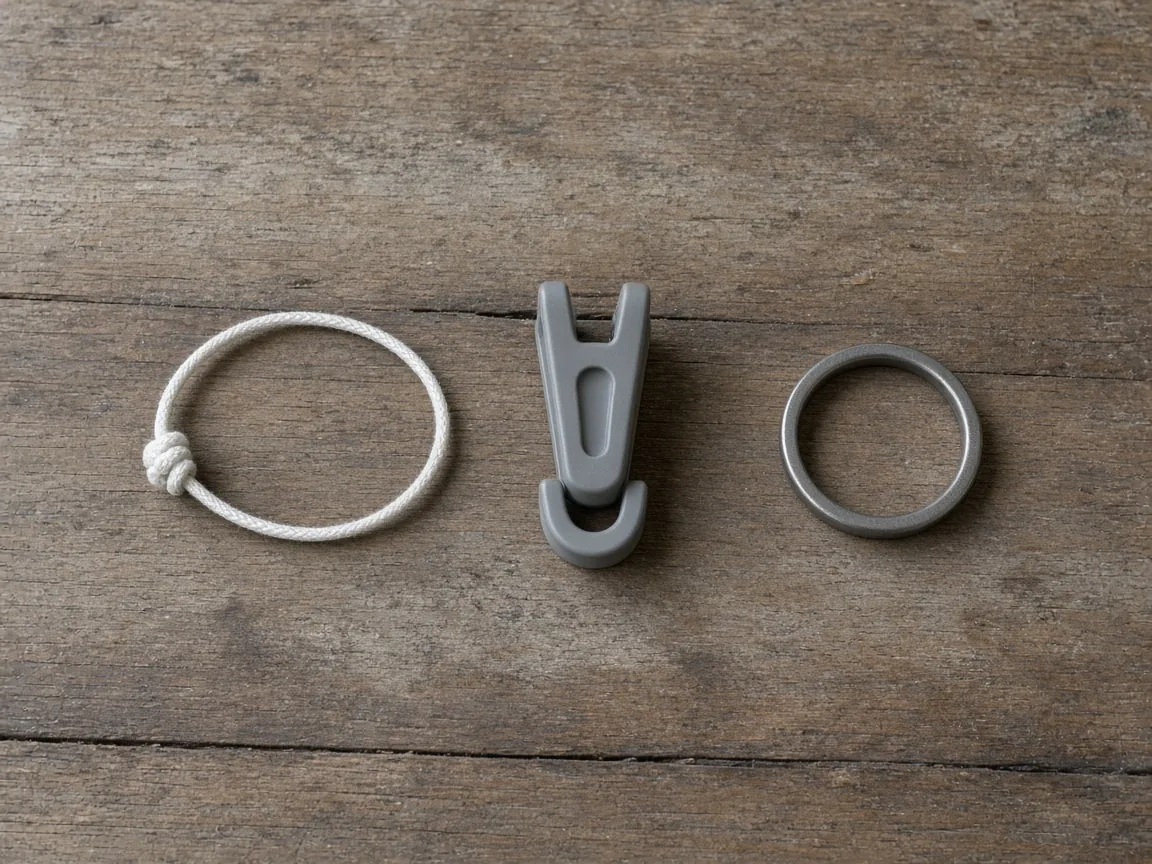
Takeaway: Write the fitting first. An empty knot cell stays missing.
When does a Lark’s Head attach the flying line?
Only on the row that is already a knotted pigtail, and only when there is no clip.
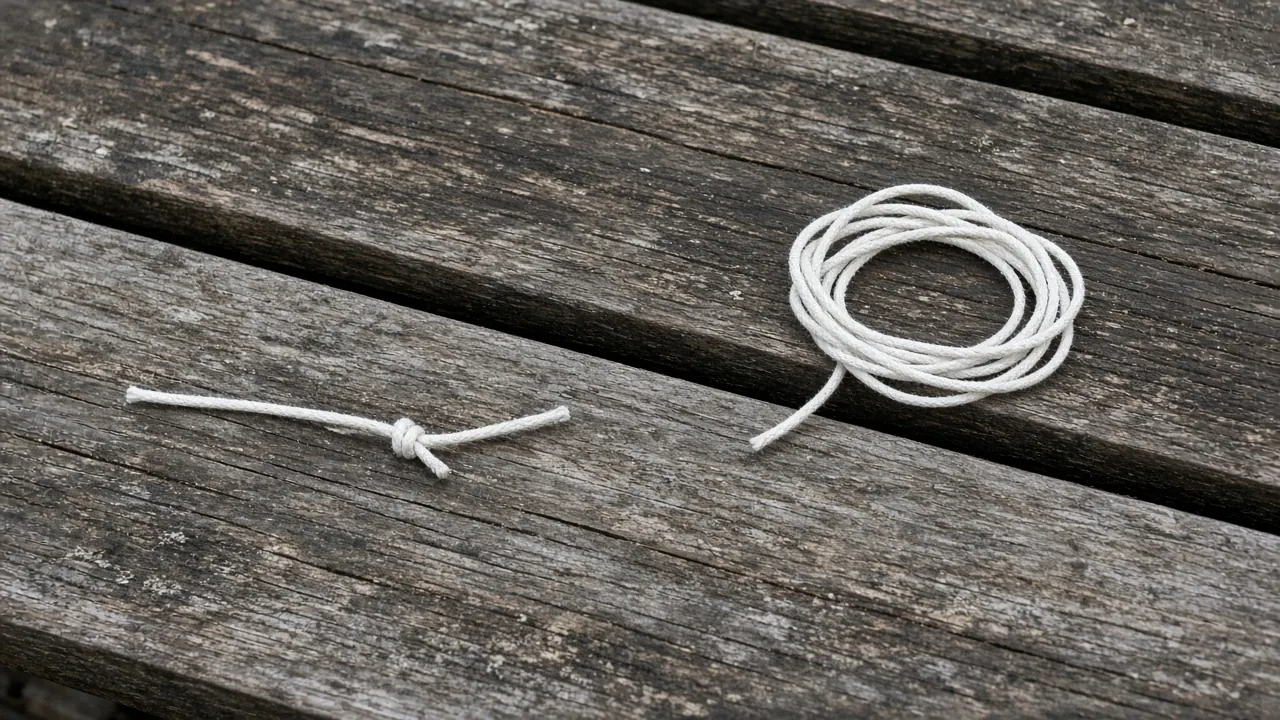
Prism’s flying-basics page says a Lark’s Head can connect the flying line to the line attachment point on the bridle without an attachment clip. In the line-repair steps on that same page, the instruction is to connect each line to a pigtail with a Lark’s Head. The parenthetical there says you can make those pigtails from bridle-weight line tied with an overhand knot. That overhand finishes the pigtail. It is not a second way to tie the flying line to the sail.
Prism’s field-repair booklet, fetched 11 October 2026, labels a Lark’s Head as the knot used to secure flying lines to the kite and to flight straps. For the Spectra lines in that booklet, it says to tie the two line loops to the two included loops of bridle line with a Lark’s Head. The figure shows the knot. The sentences do not list the wraps. This page does not add wraps, and it does not state a holding strength.
The same booklet also says to tie a string tensioner into a webbing strap with a Lark’s Head. Keep that use on that strap. It is not the bridle pigtail.
Takeaway: Lark’s Head, no clip, existing pigtail. Any other fitting stays on the model sheet.
Which knots are a different job?
A knot that joins a broken line, or that slides along a bridle leg, is not the tow connection.
| Knot, as named in the source | Job the source gives it | Tie the flying line with it? |
|---|---|---|
| Lark’s Head | Prism flying basics: flying line to the bridle point when there is no clip, and Spectra loops to bridle pigtails in the repair booklet. The booklet also uses it for a tensioner in a webbing strap | Only the pigtail with no clip, on the kite |
| Overhand | Prism flying basics: finish a pigtail made from bridle-weight line. Also the knot added on a wrist-strap pigtail when equalizing line length | Finishes the pigtail. Not the flying-line connection |
| Figure-of-eight | Kitekits, fetched 11 October 2026: keep the line from pulling through a knot. Their Lark’s Head Hitch says to tie one in the end after the line has gone around a spar or through one hole of a button | No, when a pigtail or a clip is already on the kite |
| Prussik | Kitekits: attach connecting loops to the top and bottom bridle lines and to the flight-angle adjustment line. On the Synthesis SUL, loosen the prussik and slide the pigtails | No. Sliding it changes the angle of the wing |
| Blood knot | Prism flying basics: join two pieces of line if the flying line breaks | No |
| Double overhand loop | Prism flying basics: finish the end of the flying line, for sleeved and unsleeved lines | No |
Kitekits tells the reader to complete the Lark’s Head Hitch from diagrams after that figure-of-eight. Those diagram steps are not in the text fetched for this page, so they are not copied here. The opening move, around a spar or through a button, is a kit-building step. It is not a reason to tie the flying line around a spar on a kite that already has a bridle point.
Takeaway: Match the knot to the job the source named. Do not borrow a line-repair knot for the bridle.
What do you check before launch?
Copy one row that you can see. Leave the rest missing.
| Check | What to write | If you cannot tell |
|---|---|---|
| Bridle path | Clear, and not twisted around itself. Synapse manual: check this before each launch | missing |
| Line and bridle wear | Flying line is not worn, from the Synapse maintenance list. Bridle and lines are not worn, from the Prism booklet’s pre-flight line | missing |
| Fitting | One name from the first table | missing |
| Knot | Lark’s Head only if that row is a knotted pigtail with no clip | missing |
| Line length, if the kite turns to one side | Synapse manual: flying lines equal within an inch. Shorten the long one at the wrist-strap pigtail | missing |
| After a wrist-strap length knot | Prism flying basics: lines even within a half inch. The same page also says sport-kite lines should match within 1 inch for easiest control | missing |
The Synapse manual also says to look the kite over before launch: it is set up, the sail is intact, and the flying line is not worn. A torn sail is a different repair. Retying the line does not close it.
Takeaway: Clear bridles, an unworn line, and a named fitting. A blank stays blank.
When should you stop and use the model sheet?
Stop when the fitting is a clip, a ring, or missing. Stop when the only written hitch in front of you starts by passing line around a spar.
This page does not design a new bridle, and it does not move a tow point. On the Synthesis SUL, the yellow center T moves the tow points toward or away from the spine to change control response. That movement is not how the flying line is tied on. Leave the center T where the model set it.
A traditional fighter-kite bridle is outside this page. No knot from that setup is named here.
Takeaway: If the first table says missing, the model sheet is the next page to open. This one is finished.
How this page was checked
The Lark’s Head job, the overhand pigtail, the within-an-inch and half-inch line checks, the 1-1/2 inch marks on the Synthesis SUL, and the figure-of-eight and prussik jobs come from the sources at the bottom, fetched 11 October 2026. The Synapse text opened for this page covers the flying site, troubleshooting, and maintenance. It does not include a setup diagram that spells the knot. Nobody flew a kite for this page. No breaking strength is printed. Where a public knot for a clip or a ring was absent, the table says missing.
Frequently Asked Questions
How do you attach kite string to a ring?
The pages fetched for this article do not name a knot for a ring. Record the fitting as a ring and leave the knot missing. Use the sheet for that model. On Prism's flying-basics page, a Lark's Head is the connection for a knotted pigtail when there is no clip, which is a different fitting.
References & Sources
- Kite Flying Basics (Useful Knots and line repairs) — Prism Designs
- Synapse Manual (troubleshooting and maintenance) — Prism Designs
- Synthesis SUL Manual (bridle pigtails and center T) — Prism Designs
- Don't Panic! The kite pilot's guide to field repairs (Lark's Head and bridle loops) — Prism Designs
- Useful Kite Line Knots — Kitekits