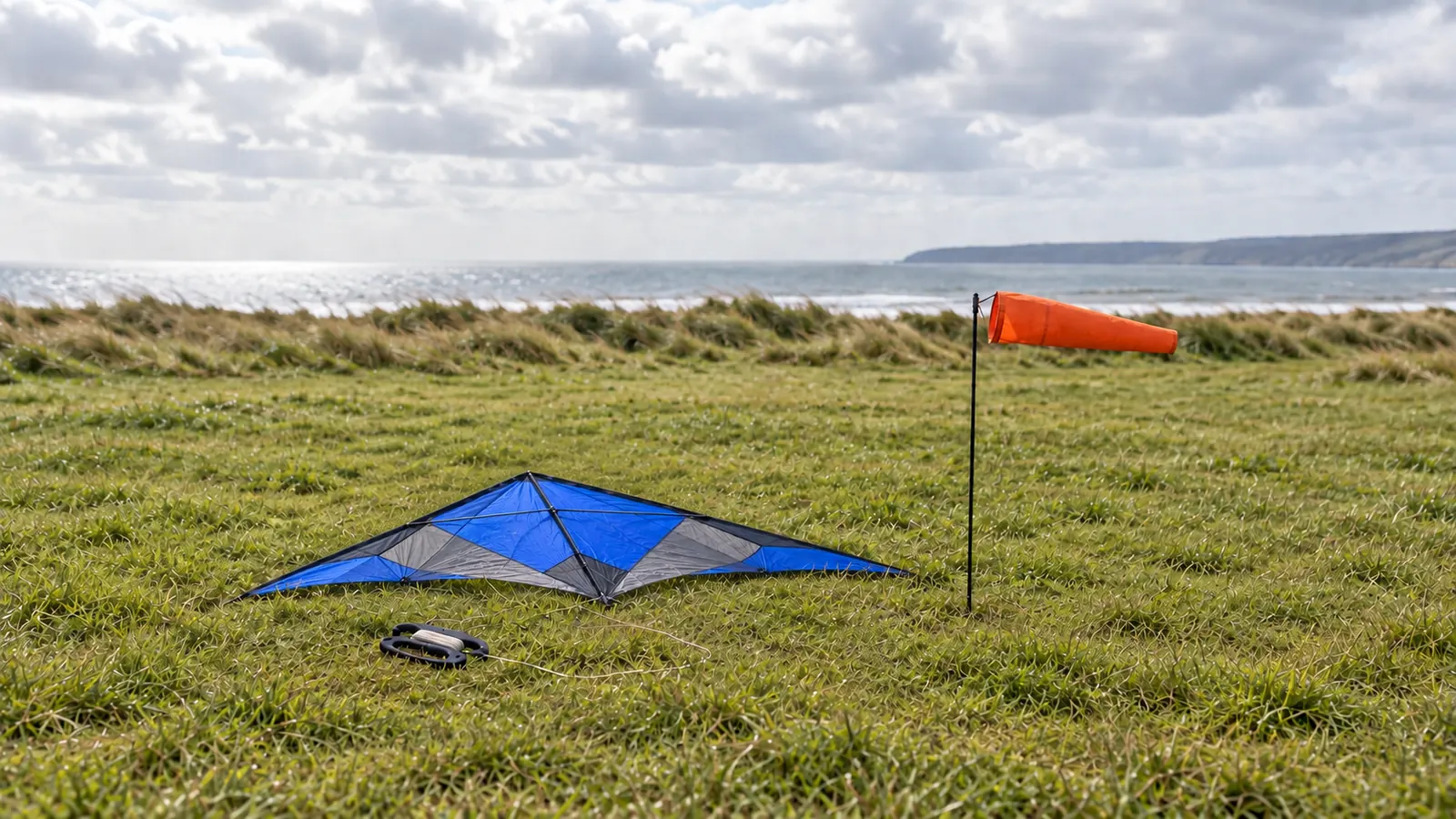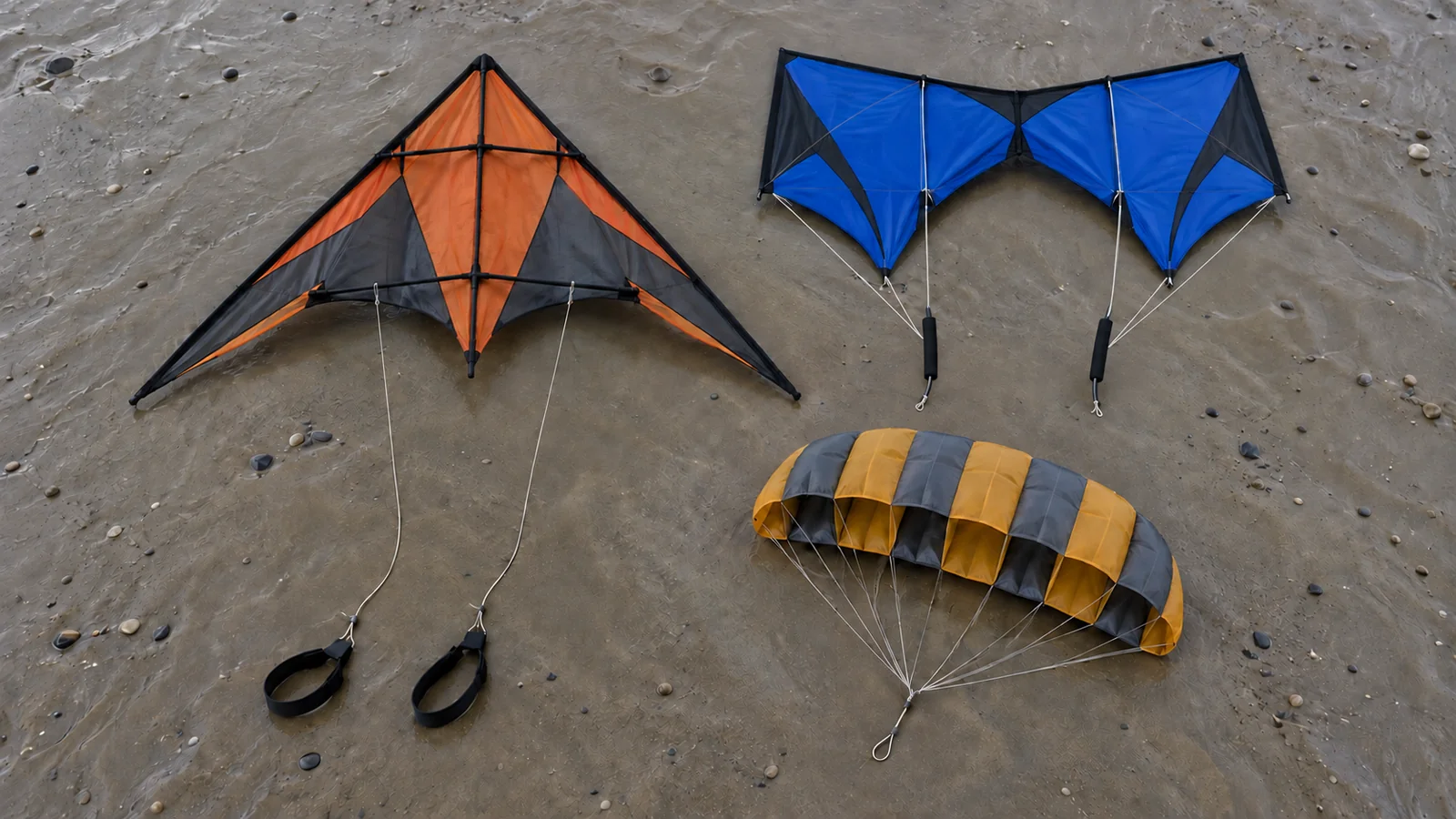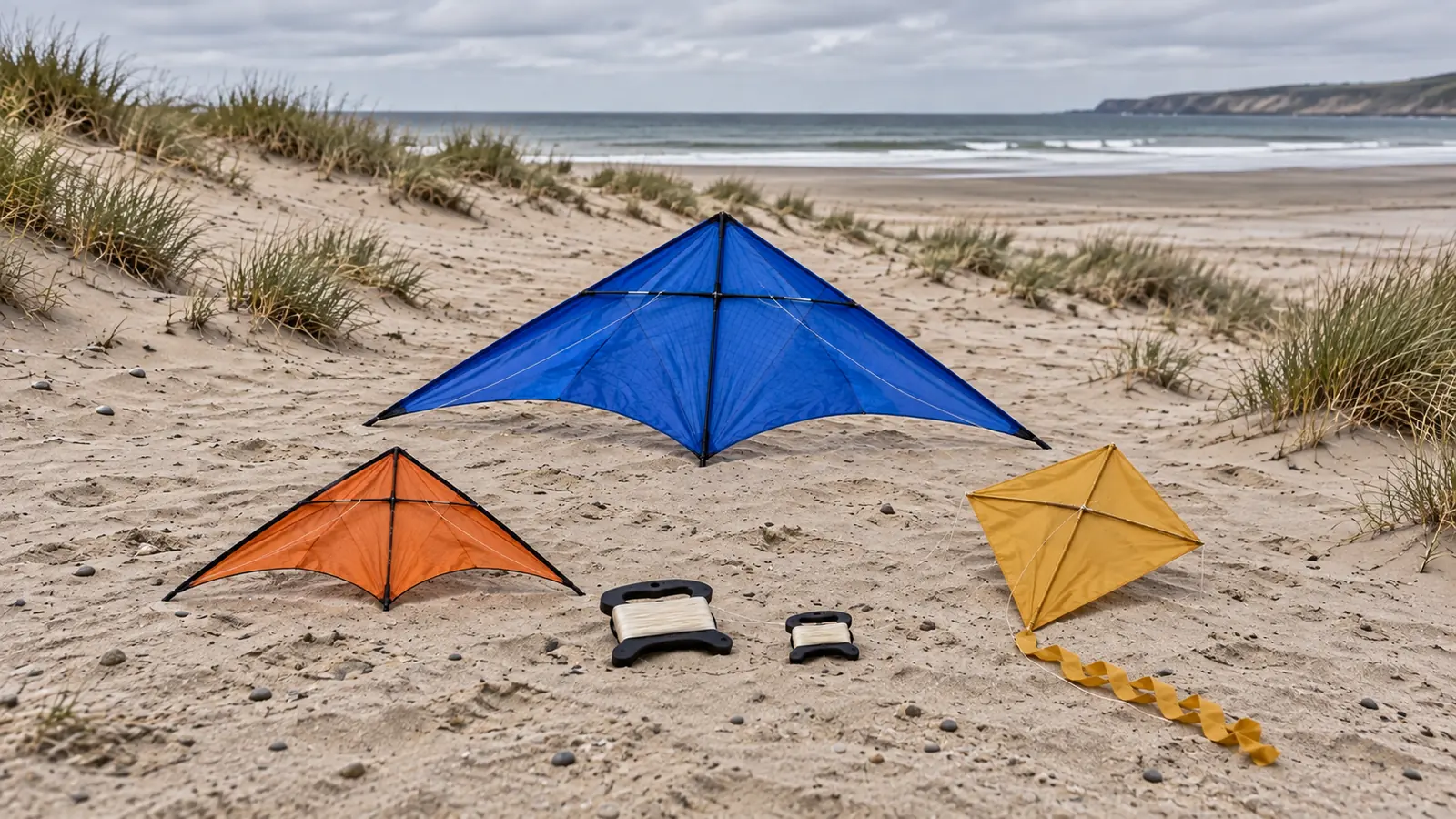
A single line kite bought for the wrong wind or the wrong flier spends the day on the ground or pulls harder than its owner can hold. Choose in this order: the wind you usually get, then a kite type rated for that wind, then a size and age rating that suit the person holding the line, then the frame and sail.
This guide is compiled from public sources and makers’ published specifications, not from our own tests. A single line kite flies on one line and is steered only by pulling in, letting out and moving your feet. Deltas and diamonds are described as light-to-moderate-wind kites; HQ’s frameless Orca parafoil is rated from Beaufort 2.5, slightly higher than its deltas; box kites have the most parts. As one worked example, HQ’s catalog (checked October 7, 2026) rates a 134 cm delta for Beaufort 2–5 with an age 5+ label, and a 4 m delta for the same Beaufort range but age 14+ with 65–100 kp line recommended. The rest of this guide turns those labels into a choice.
Quick specs: what to check before you choose
| Input or item | Typical value or source | Why it matters |
|---|---|---|
| Your usual wind | Beaufort force from a forecast or field signs (NWS table) | Decides which kite types can fly at all |
| Maker’s wind rating | Product listing in Bft, mph or km/h (HQ Delta Stern: 2–5 Bft) | Must cover your usual wind, including gusts |
| Kite type | Delta, diamond, parafoil, sled or box | Sets stability, setup time and pull |
| Age rating | Product listing (HQ examples: 5+, 8+, 10+, 14+) | A maker’s label that rises with size; not a measure of skill |
| Span and line strength | Listing, cm and kp or lb (HQ: 17 kp line on a 134 cm delta) | Bigger kites pull harder and need stronger line |
| Frame | Fibreglass, carbon or none (frameless) | Affects weight, stiffness and what breaks in a crash |
| Sail | Polyester, ripstop polyester or ripstop nylon | Affects stretch, tear behaviour and sun exposure |
The rest of this page explains each row. If you only know today’s forecast in miles per hour, start with our wind speed guide by kite type and come back with a Beaufort number.
What is a single line kite?
A single line kite is any kite flown on one tether, with no second line to steer it. You control it by letting line out, taking line in and walking. NASA’s kite pages explain the mechanism: pulling the line increases the kite’s speed through the air, which raises lift and makes it climb, while letting out line first makes it sink a little.
A bridle (the short lines that join the flying line to the kite) and often a tail hold the kite at a steady angle to the wind. That fixed angle is what makes recreational single line kites forgiving: the kite goes where the wind and the line put it. Steering in any direction, flying backwards and hovering are what multi-line kites are built for; our comparison of dual-line and quad-line stunt kites covers that family.
Takeaway: If you want a kite that flies itself once it is up, you want a single line kite; if you want to steer tricks, you want a stunt kite.
The five main single line kite types compared
Five families cover almost every single line kite in a toy shop or kite store: delta, diamond, parafoil, sled and box. The names are loose. NASA’s kite pages point out that “what I call a diamond kite may be called a two-stick kite at another site,” and a delta is sometimes sold as a “bat.” Judge a kite by how it is built, not by its name.
| Type | How it holds its shape | Wind (where a source gives it) | Setup | Typical first-kite fit |
|---|---|---|---|---|
| Delta | Triangular sail on a central spine and two wing spars, with a keel underneath | Noted for stability and light-wind flying (encyclopedia entry); HQ deltas rated from 1.5–2 Bft | Slot in one cross spar | Strong fit for children and adults |
| Diamond (two-stick, Eddy) | Two crossed spars, usually with a tail | Best in light to moderate winds (encyclopedia entry) | Two spars, attach tail | Classic children’s kite |
| Parafoil (foil) | No frame; wind inflates cells into a wing shape | One example: HQ Orca parafoil rated 2.5–6 Bft | None; unroll and launch | Packs small (maker’s description of the Orca) |
| Sled | Vertical spars only; wind curves the sheet into a half-cylinder | No rating in our sources; check the model | Few parts | Few parts to lose |
| Box (cellular) | Four parallel struts braced into a rigid box with two sail bands | No rating in our sources; described as developing relatively high lift | Most parts to assemble | Pick it if building is part of the fun |
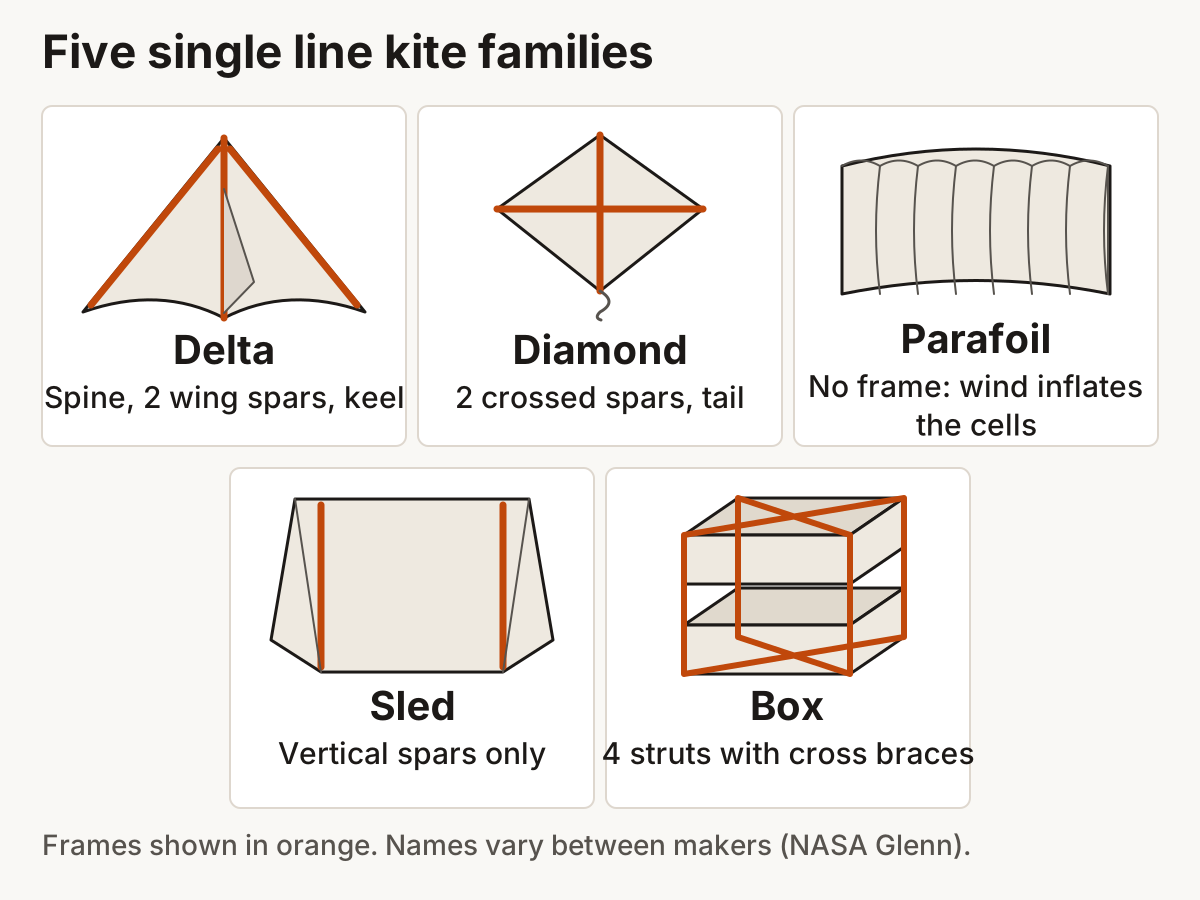
A few details from the sources matter for buying. Deltas have a flexible keel under the spine that acts like a vane, and they roll up small when the cross spar is removed, which makes them easy to carry. Diamonds are usually flown with a tail, so check that one is included. Parafoils are most often made of ripstop nylon and have no rods to pack. Sleds rely on wind pressure to curve the sheet between two vertical spars. Other type-by-type guides are collected in the Kite Types section.
Common mistake: Buying by the name on the bag. A “bat kite” from one maker and a “delta” from another can be the same structure; read the frame description and the wind rating instead.
Takeaway: For a first kite, start with a delta or a diamond, and consider a frameless parafoil when your usual wind sits inside its rated range.
Step 1 — Read the wind you usually get
The 4-Step Single Line Kite Match starts with wind because no other choice rescues a kite flown outside its range. Use the Beaufort force, a 0–12 scale that ties wind speed to things you can see. The National Weather Service table below covers the range where recreational kites fly.
| Beaufort force | Speed (mph) | Speed (knots) | What you see on land (NWS) |
|---|---|---|---|
| 2, light breeze | 4–7 | 4–6 | Wind felt on face; leaves rustle |
| 3, gentle breeze | 8–12 | 7–10 | Leaves and small twigs in constant motion; light flag extended |
| 4, moderate breeze | 13–18 | 11–16 | Dust and loose paper raised; small branches move |
| 5, fresh breeze | 19–24 | 17–21 | Small trees in leaf begin to sway |
| 6, strong breeze | 25–31 | 22–27 | Large branches in motion; whistling in wires |
Two forecast terms matter here. The NWS defines sustained wind as speed averaged over two minutes, and a gust as a rapid fluctuation of 10 knots or more between peaks and lulls. A forecast of 10 mph gusting to 25 mph spans three Beaufort forces, so check the kite’s rating against the gusts as well as the average. The full Beaufort and unit-conversion table also covers knots, km/h and m/s.
Takeaway: Write down the Beaufort force you get on a typical visit to your field or beach, and the gust figure, before you look at any kite.
Step 2 — Match the kite type to that wind
Choose a kite whose published wind rating covers the Beaufort force and gusts you wrote down in Step 1. Makers usually print that rating in Beaufort force, often with an mph or km/h conversion. The table below compiles single line kites from HQ, a German maker whose product pages list a wind rating for each model we checked, next to what the NWS lists for the same Beaufort range.
| HQ model (type) | Rating as published by HQ | NWS mph for that Beaufort range |
|---|---|---|
| Delta Stern, 134 cm (delta) | 2–5 Bft (4–24 mph) | 4–24 mph |
| Delta Spectrum Spin, 210 cm (delta) | 2–5 Bft (5–24 mph) | 4–24 mph |
| Hoffmanns Canard Delta, 295 cm (delta) | 1.5–4 Bft (4–18 mph) | Low end between Bft 1 (1–3 mph) and Bft 2 (4–7 mph); top 18 mph |
| Delta Fireworks, 410 cm (delta) | 2–5 Bft (9–22 mph) | 4–24 mph |
| Bat Black S, 60 cm (small framed kite) | 2–4 Bft (5–13 mph) | 4–18 mph |
| Parafoil Orca, 200 cm (parafoil) | 2.5–6 Bft (9–31 mph) | Low end between Bft 2 (4–7 mph) and Bft 3 (8–12 mph); top 31 mph |
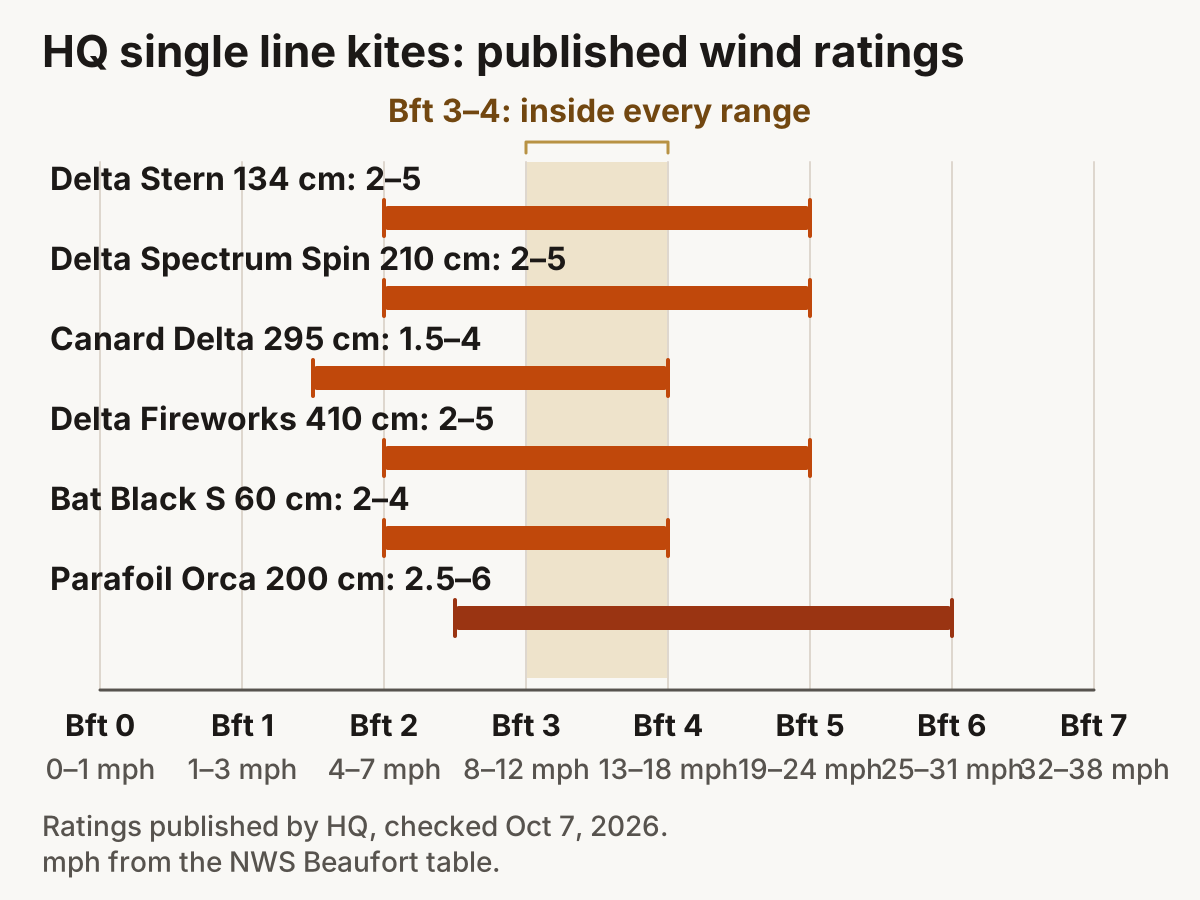
Read the table from the left. The large Canard Delta starts lowest, at Beaufort 1.5, and the frameless Orca parafoil reaches highest, at Beaufort 6. The small Bat Black S and the Canard Delta both stop at Beaufort 4, so neither is rated for a fresh breeze. By their Beaufort figures, all six cover Beaufort 3 and 4; by the mph figures HQ prints, all six cover roughly 9–12 mph.
Common mistake: Reading only one of the two figures. HQ’s own Beaufort chart matches the NWS, yet some of its product pages print narrower mph ranges for the same Beaufort span (the Bat Black S lists 2–4 Bft as 5–13 mph, while Beaufort 4 runs to 18 mph on the NWS table). When the two disagree, use the narrower range until the maker confirms which one is meant.
These ratings come from the maker and describe each model, not every kite of that type. A cheaper delta from another brand needs its own rating checked, and two-line or four-line kites carry their own ranges, compared in our stunt kite wind range table. If a kite has no published wind range at all, ask the seller or maker for one before relying on it.
Takeaway: Pick a kite whose published range covers both the sustained wind and the gusts you usually get.
Step 3 — Size the kite to the person holding the line
Once the wind is covered, size decides who can fly the kite. A bigger sail catches more wind, so it pulls harder and needs stronger line. HQ’s listings show the pattern clearly.
| HQ model | Span | Line supplied or recommended | Age rating |
|---|---|---|---|
| Delta Stern | 134 cm | Polyester 17 kp (37 lb), 40 m, included | 5+ |
| Parafoil Orca | 200 cm long, 60 cm wide | Polyester 25 kg, included | 8+ |
| Delta Spectrum Spin | 210 cm | Polyester 45 kp, 60 m, included | 10+ |
| Hoffmanns Canard Delta | 295 cm | Not stated on the page | 14+ |
| Delta Fireworks | 410 cm | Polyester 65–100 kp recommended | 14+ |
The encyclopedia entry on delta kites makes the same point in words: larger deltas are generally recommended for experienced flyers because they need appropriately rated line, and in moderate to strong wind even a delta pulls hard once it is scaled up. Age ratings are one maker’s labels, not a safety standard or a measure of skill, so use them as a floor rather than a target.
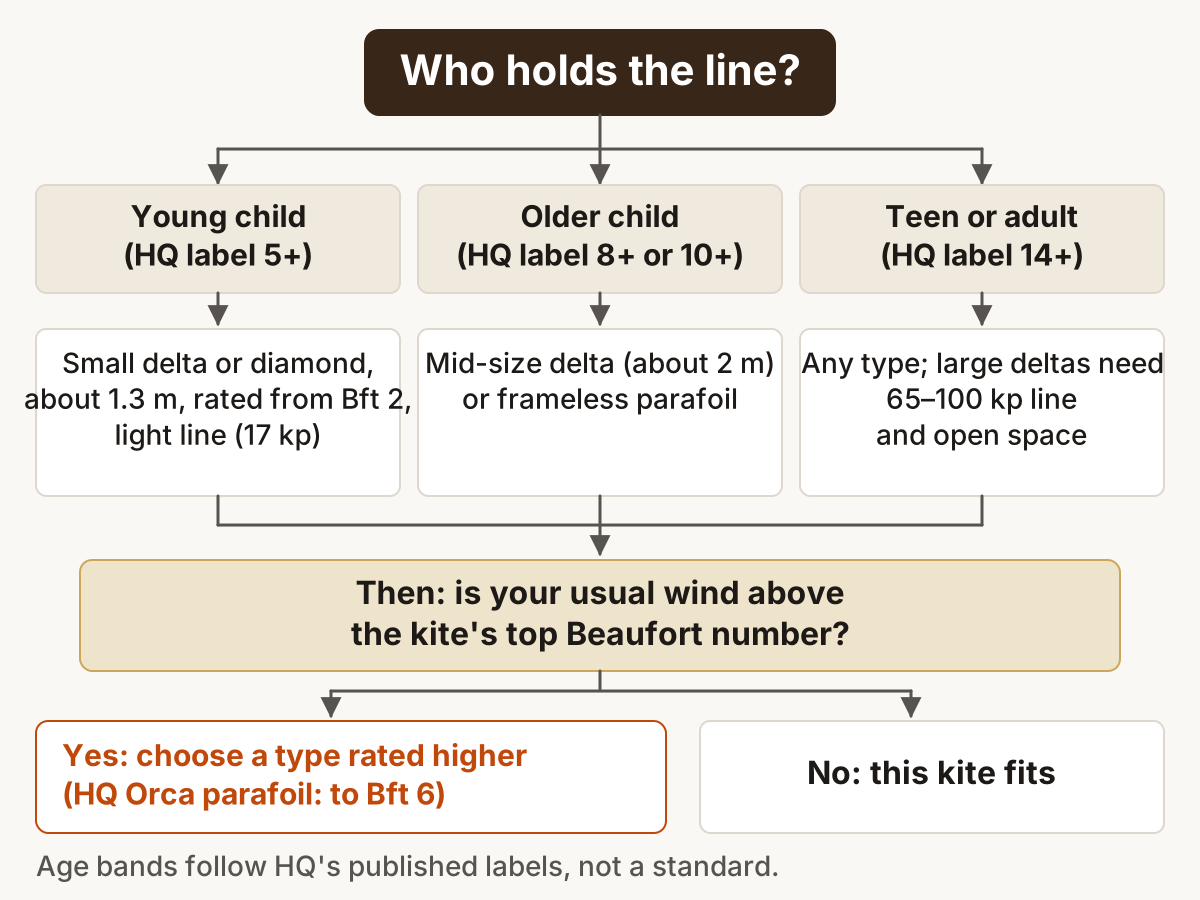
For children, a small delta or diamond rated from Beaufort 2 with light line is the usual start; the 134 cm, age 5+ delta above is one example. For older children, a mid-size delta or a frameless parafoil labelled 8+ or 10+ is the next step up in HQ’s range. HQ labels its 295 cm and 4 m deltas 14+, and the encyclopedia entry on deltas recommends large ones for experienced flyers, so treat them as a step up even for adults: they need heavier line, open space and some practice. If two people share one kite, size it for the smaller person.
Takeaway: Choose the size for the weakest pair of hands that will hold the line, then confirm the line strength printed on the listing.
Step 4 — Check the frame and sail materials
Materials decide how the kite survives crashes, sun and gusts. NASA’s kite pages describe the basic recipe: a frame “normally made of wood or plastic,” covered by a paper, plastic or cloth skin, built as light as possible yet strong enough for high winds. Today’s listings use more specific materials.
| Material | Where it shows up in the listings above | What it means for you |
|---|---|---|
| Fibreglass rods | 4 mm on the 134 cm delta, 6 mm on the 210 cm delta | Used here on the small and mid-size kites |
| Carbon rods | 6 mm on the 295 cm delta; carbon plus fibreglass on the 4 m delta | Described in the encyclopedia entry on sport kites as lightweight and stiff; used here on the larger kites |
| No frame | Orca parafoil | No rigid rods to break; the wind itself inflates the cells, so it needs enough wind to hold its shape |
| Polyester sail | 134 cm delta, Orca parafoil | Listed simply as polyester on these entry-level kites |
| Ripstop polyester | 210 cm and 4 m deltas, Bat Black S | Ripstop weave with less stretch than nylon |
| Ripstop nylon | 295 cm Canard Delta | Woven sail with more stretch; also the usual parafoil fabric |
Ripstop is a woven fabric with thicker reinforcement yarns at regular intervals, which help stop a small hole from running into a long tear. Ripstop polyester lacks nylon’s natural stretch, which changes how a sail holds its shape and how it handles a sharp gust. Our ripstop nylon fabric guide compares fabric weights, coatings and tear figures in detail, and the Materials and Care section collects related articles.
Common mistake: Comparing sails by thickness to the touch. Coatings change how a fabric feels; compare the material named on the listing and, for fabric bought by the yard, the weight in grams per square meter.
Takeaway: In HQ’s range, fibreglass and plain polyester appear on the small kites and carbon and ripstop nylon on the largest; check the material list against the size you are buying.
First flight: launch and climb
A single line kite launches with the wind behind you and the kite facing you. NASA’s description of launch and flight gives the sequence and the reason behind each move.
- Face the kite with the wind at your back and let out some line.
- Give the line a small tug. On a windy day, wind speed plus that tug is usually enough to lift the kite.
- On a lighter day, walk backwards or run into the wind to add speed through the air.
- Once it rises, stand still. Wind usually gets faster with height because air near the ground is slowed by the surface, so the kite finds steadier air as it climbs.
- To gain height, pull in a little, then let line out slowly. Expect a small dip each time you release line.
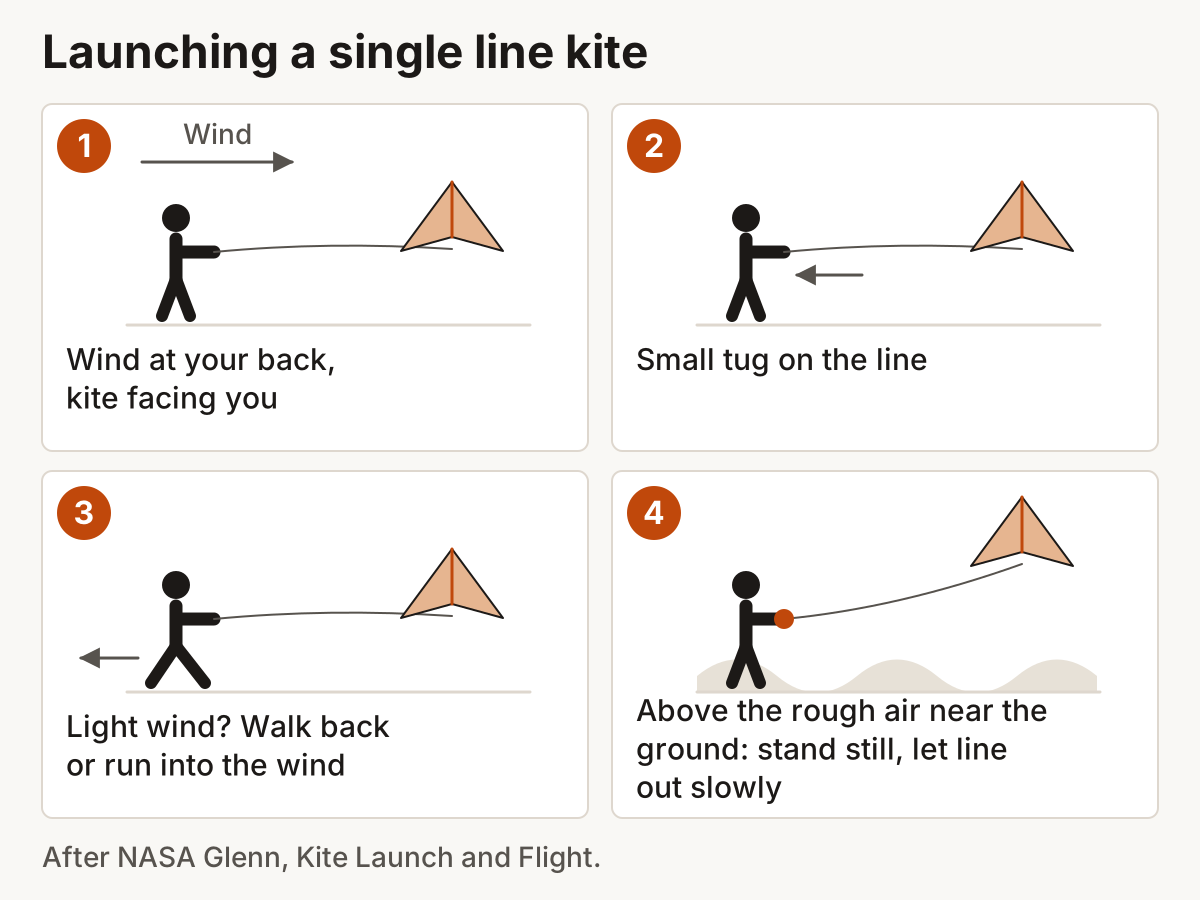
If the kite climbs, wobbles and dives repeatedly near the ground, turbulent air near the surface is one thing to check: NASA notes that air close to the ground is slow and unsteady, and moving away from trees and buildings gives the kite cleaner wind. If it will not leave the ground after several tugs, compare today’s Beaufort force with the kite’s rating using the field checks in our wind speed guide.
Takeaway: Launch with the wind at your back, get the kite above the rough air near the ground, then stand still and let it fly.
Safety basics for kids and adults
Fly in open ground away from power lines, roads and storms, and check local rules. NASA’s kite safety page says to fly in an open field or near the shore, and never near trees, highways or houses. It is blunt about power lines: never fly near high-tension wires, because a kite touching the lines can kill the person holding it.
- Thunderstorms: the NWS lightning program says there is no safe place outside when thunderstorms are near. “When Thunder Roars, Go Indoors,” and wait 30 minutes after the last thunder or lightning before going back out.
- Roads: chasing a kite across a road is a stated hazard on NASA’s page, and drivers are distracted by kite fliers.
- Federal rules: 14 CFR Part 101 bars operating any kite in a way that creates a hazard to other people or their property (§101.7). Its operating limits apply to kites that weigh more than 5 pounds: no flying within five miles of an airport boundary, more than 500 feet above the surface, less than 500 feet from the base of a cloud, or where ground visibility is under three miles (§101.13). Those limits do not apply below the top of a structure and within 250 feet of it, if the kite does not obscure the structure’s lighting.
- Local rules: parks, beaches and towns can set their own rules for kite flying. Check before you go.
Takeaway: Pick open ground away from wires, roads and storms, and check local rules for the specific park or beach.
When this does not apply
- Stunt, power and traction kites flown on two or more lines follow different rules for size and wind; see the dual-line and quad-line comparison.
- Wind ratings here are the makers’ published figures, measured under conditions they do not describe. Treat them as a starting point and confirm on your own field.
- Gusty sites next to buildings, dunes or tree lines can exceed a kite’s range even when the forecast average fits.
- Age bands are one maker’s labels. A strong ten-year-old and a small adult can both sit outside them.
- Large show kites over 5 pounds fall under federal rules and usually need experience, help and permissions that this guide does not cover.
Takeaway: Treat every rating here as the maker’s starting point and confirm it on your own field.
Related reading
- Kite wind speed guide — Convert today’s forecast into a Beaufort force and check it against field signs.
- Stunt kites compared — See when two or four lines make more sense than one.
- Ripstop nylon for kites — Compare sail fabrics by weight per square meter, stretch and tear figures.
- Kite Types — Browse every kite-type guide on this site.
Method and sources: how this guide was put together
This is a comparison compiled from public sources, not a product test; nobody on this site flew the kites listed. Wind ratings, sizes, materials, line strengths and age labels come from HQ’s (Invento’s) product pages. The Beaufort table and forecast terms come from the National Weather Service; launch physics and safety rules from NASA Glenn Research Center’s kite pages; federal limits from 14 CFR Part 101 as published on eCFR. Type definitions come from encyclopedia entries on each kite type and on sport kites. The point about fabric feel comes from G. William Tyrrell Jr.’s 1981 Kite Lines article on kite nylon, reprinted in 2015; it is old and used only for that general point. HQ’s own Beaufort chart was used to check its product-page conversions. All sources were accessed on October 7, 2026, and are listed under References below. Prices are deliberately left out. This site does not sell kites.
Frequently Asked Questions
What is the best single-line kite?
There is no single best model. The best one for you carries a maker's wind rating that covers the wind you usually get and a size the person holding the line can manage. For most first kites that means a small or mid-size delta or a diamond rated from about Beaufort 2.
What are the five main types of kites?
There is no official list; NASA's kite pages note that kite names are not standardized. For single line kites, this guide uses delta, diamond, parafoil, sled and box, compared in the types table above. Stunt kites flown on two or four lines are a separate family.
Is flying kites illegal in the USA?
Federal rules in 14 CFR Part 101 bar flying any kite in a way that endangers people or property, and set further limits for kites over 5 pounds, such as no flying within five miles of an airport boundary or more than 500 feet up, with a narrow exception near structures. Parks, beaches and towns can add rules, so check the place you plan to fly.
How old should a kid be to fly a kite?
No universal age exists; makers print an age label on each kite, and HQ's labels run from 5+ on its smallest delta to 14+ on its largest (see Step 3). The label is not a skill test. Hold the line yourself until the child can manage the pull.
What shape kite is easiest to fly?
Deltas and diamonds are the usual starting points. Encyclopedia entries describe deltas as stable and commonly recommended for beginners, and diamonds as widely used by children. HQ says its Delta Stern is suitable even for light winds with very stable flight, which is the maker's own claim.
Why is my kite not flying?
Check two things first: whether the wind at the launch spot is below the kite's rated minimum, and whether trees or buildings are breaking it up. NASA notes that wind near the ground is slower and less steady than higher up. Move to open ground, compare the Beaufort force with the rating and let out line once it climbs.
Do you push or pull a kite?
You pull. NASA explains that pulling the line speeds the kite up through the air, which raises lift and makes it climb. Letting out line makes the kite drop a little at first because line tension and speed fall, then it rises again as you take up the slack.
References & Sources
- Beaufort Wind Scale — National Weather Service, Miami
- Beaufort Wind Scale (Online Tornado FAQ) — NOAA Storm Prediction Center
- NWS glossary: sustained wind — National Weather Service
- NWS glossary: gust — National Weather Service
- Lightning Safety Overview — National Weather Service
- Kites — NASA Glenn Research Center, Beginner's Guide to Aeronautics
- Kite Launch and Flight — NASA Glenn Research Center
- Kite Safety — NASA Glenn Research Center
- 14 CFR Part 101: Moored Balloons, Kites, Amateur Rockets, and Unmanned Free Balloons — Electronic Code of Federal Regulations
- Delta Stern (product page) — Invento / HQ
- Delta Spectrum Spin 2m (product page) — Invento / HQ
- Hoffmanns Canard Delta (product page) — Invento / HQ
- Delta Fireworks 4 m (product page) — Invento / HQ
- Bat Black S (product page) — Invento / HQ
- Parafoil Kite Orca (product page) — Invento / HQ
- Delta kite — Wikipedia
- Diamond kite — Wikipedia
- Parafoil — Wikipedia
- Sled kite — Wikipedia
- Box kite — Wikipedia
- Ripstop — Wikipedia
- HQ Beaufort scale — Invento / HQ
- Sport kite — Wikipedia
- Mastering Nylon (G. William Tyrrell Jr., Kite Lines, 1981; reprinted in Kiting, Summer 2015) — Fly Market Kitemaking Supply (PDF)