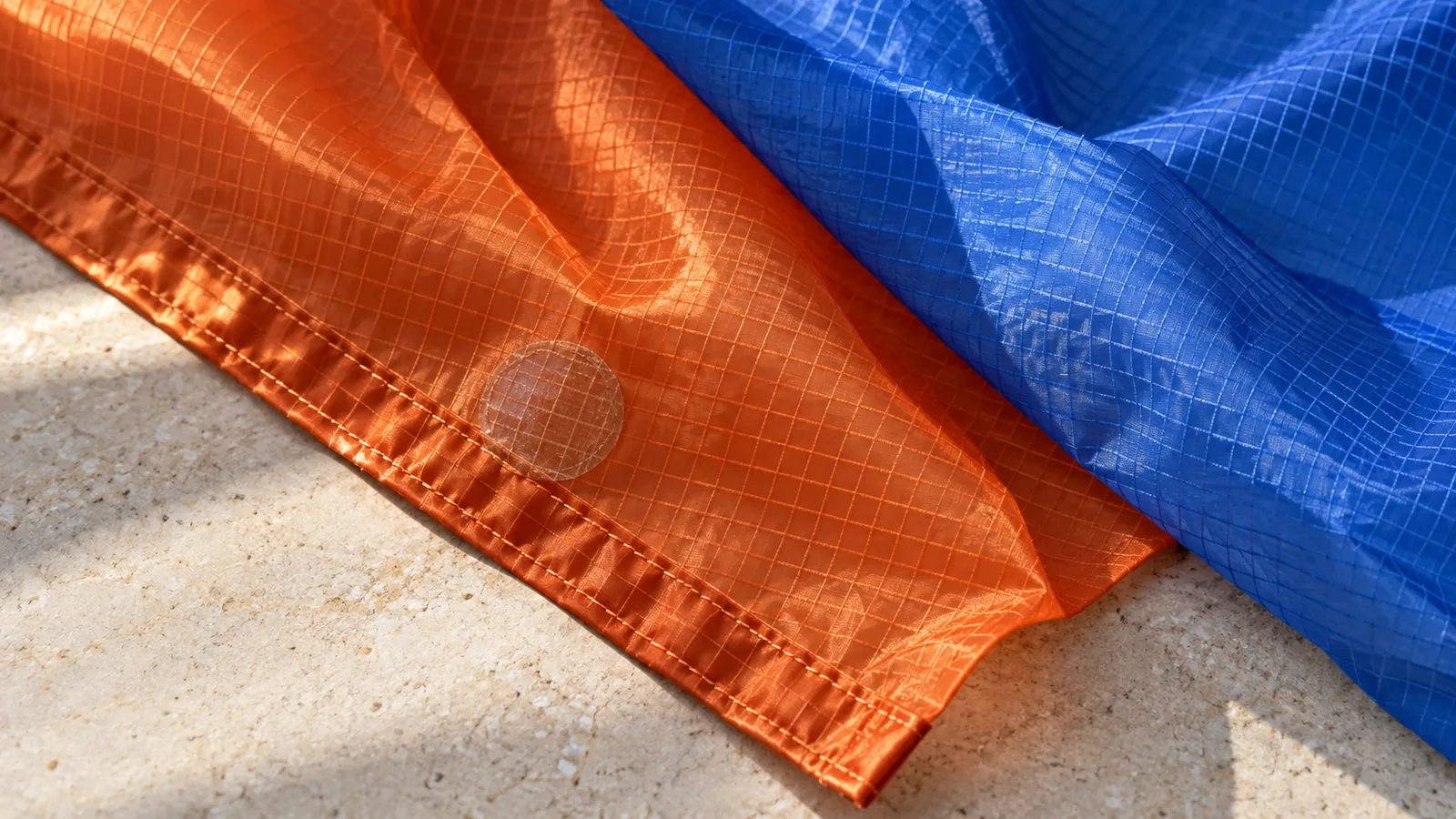
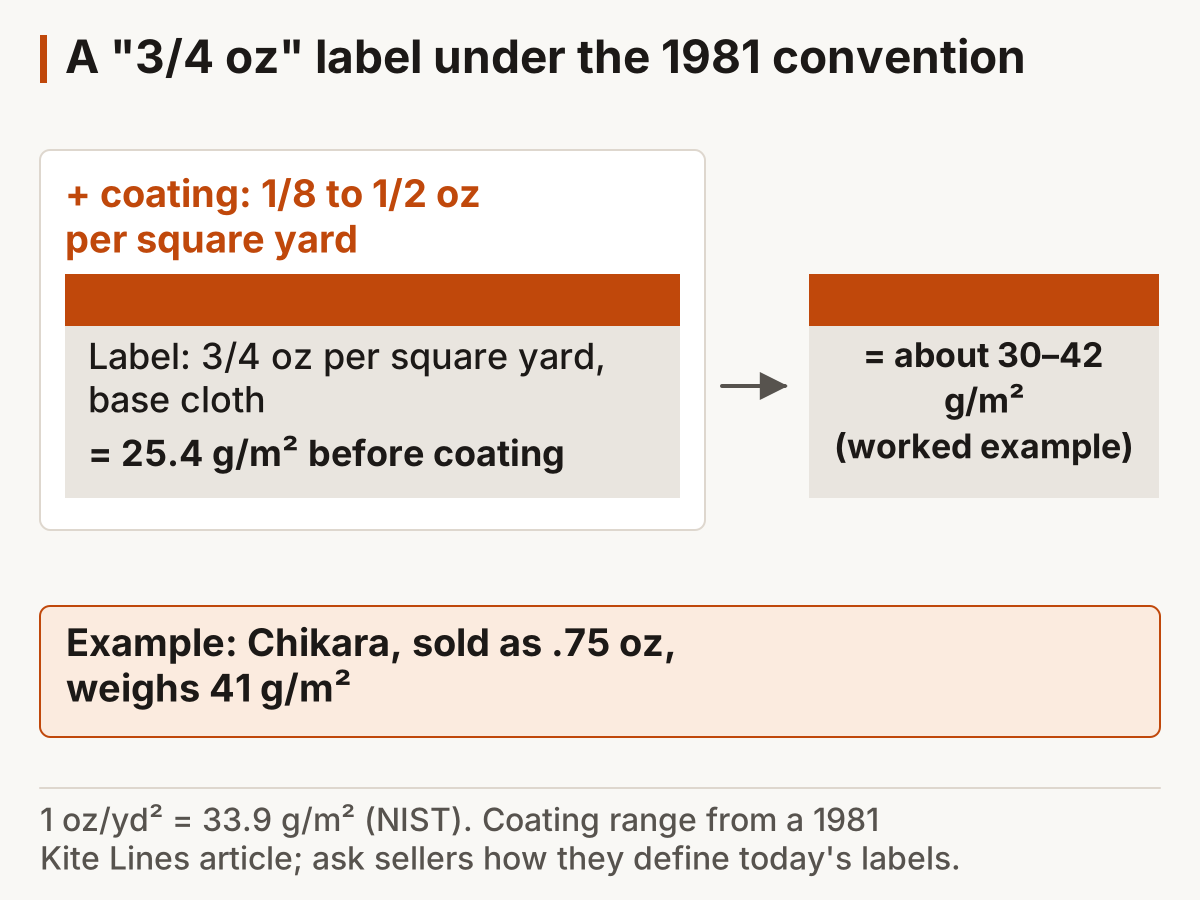
Buying kite fabric by its “3/4 oz” label alone can leave you with the wrong cloth: one kite nylon sold as “.75oz” weighs 41 g/m², about 60% more than a straight conversion of the label. Compare fabrics in grams per square meter (g/m²) from the spec sheet, and treat nylon as the candidate when tear resistance and give matter and polyester when low stretch matters.
This is a comparison of published fabric specifications, not a test of our own. Ripstop is woven with a grid of thicker reinforcement yarns that helps keep small tears from spreading, and kite ripstop is coated so the sail is almost airtight. On one distributor’s sheets, the kite nylon Chikara weighs 41 g/m² with a 5.0 kg tear figure and about 50% elongation at break, while the polyester Icarex weighs 37 g/m² with a 1.2 kg tear figure and 12–18% elongation at break. The test methods behind those figures are not published, so read them as the distributor’s figures, not a like-for-like test.
Quick specs: what to read on a kite fabric listing
| Input or item | Typical value or source | Why it matters |
|---|---|---|
| Fibre | Nylon 6.6, nylon 6 or polyester (spec sheet) | Sets stretch, tear behaviour and sun resistance |
| Weight | g/m², coated (e.g. 37, 41, 48 g/m² on Top Fabrics sheets) | Lighter cloth flies in less wind |
| Weight class label | “1/2 oz”, “3/4 oz”, “1.5 oz” (US retail names) | Traditionally the base cloth before coating; not the same as g/m² |
| Yarn | Denier or dtex (e.g. 30 denier = 33 dtex) | Describes the thread, not the fabric |
| Coating | Polyurethane on one or both sides; water-repellent finish | Airtightness and water uptake |
| Air permeability | cc/cm²/s (0.02–0.1 on Top Fabrics sheets) | How much air leaks through the sail |
| Tear and elongation | kg and % from the same seller’s sheet | Toughness versus shape-holding |
What is ripstop nylon, and why do kites use it?
Ripstop nylon is a woven nylon fabric with thicker reinforcement yarns running through it in a square grid, which helps keep a small hole from running across the sail. The encyclopedia entry on ripstop credits it with a good strength-to-weight ratio, and lists kites, parachutes, sails, tents and hot-air balloons among its uses. Parafoil kites are most often made from it.
A 1981 kitemaking article by G. William Tyrrell Jr., reprinted in 2015, describes the details kite builders care about. The reinforcement grid runs “checkerboard-style” in 1/8, 3/16 or 1/2 inch squares. The fabric “will tear if punctured,” but the second weave gives it extra tear resistance. Kite ripstop is coated: urethane or acrylic is rolled into the cloth under pressure and heat, which makes it slick and low in porosity. Today’s specialist kite fabrics follow the same idea; Icarex polyester, for example, has a double-yarn grid every 10 mm in both directions and a polyurethane coating on both sides.
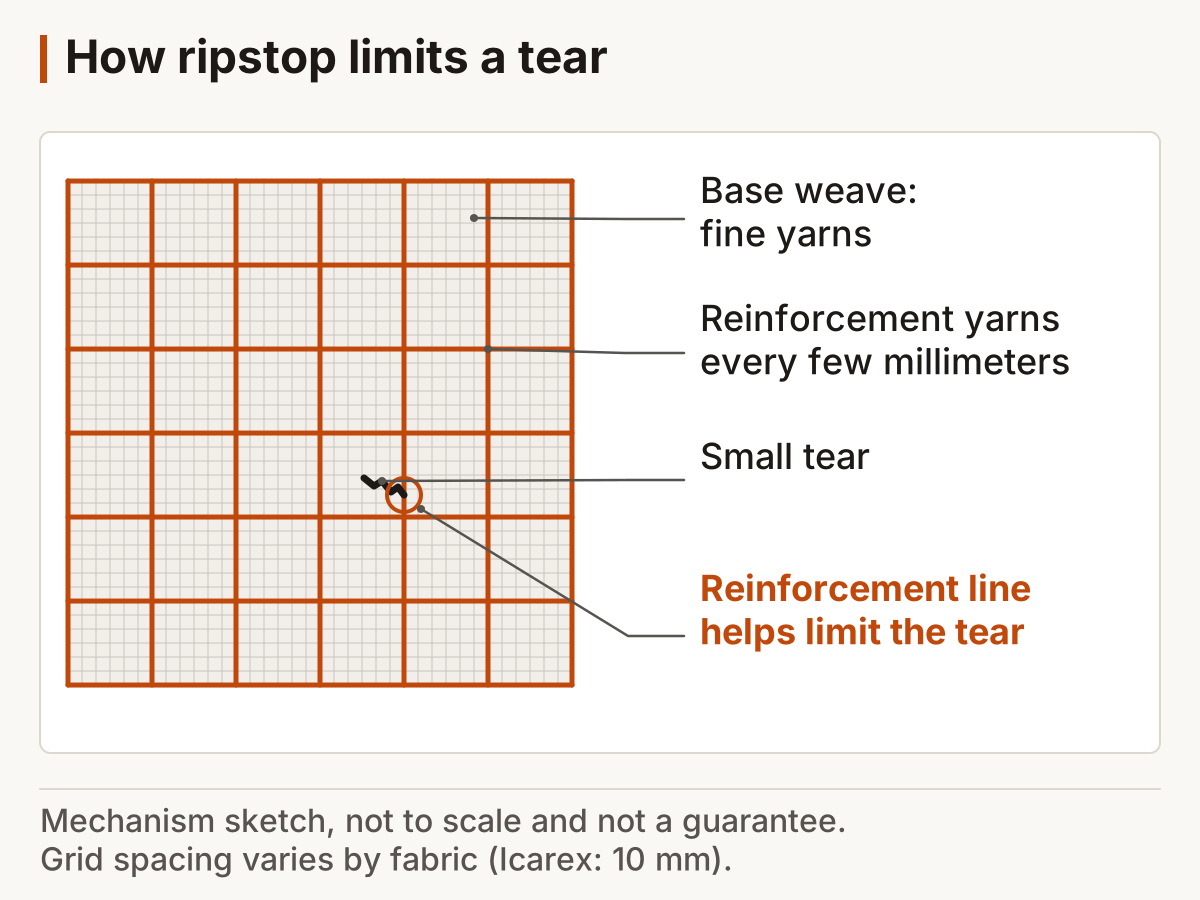
The grid is why ripstop suits kites that crash, flap and rub on sand. It does not make the cloth puncture-proof, and it does not decide how much the sail stretches; that comes from the fibre and the coating, covered next. Single line kites use both nylon and polyester sails, as our single line kite materials table shows.
Takeaway: Ripstop helps limit how far a tear runs; the fibre and coating decide much of the rest about how the sail behaves.
Ripstop nylon vs ripstop polyester for kites
On published figures, the two nylons list higher tear and elongation values and the polyester lists the least elongation. The table sets out three kite fabrics from the specification pages of one distributor, Top Fabrics; the figures share a format, but the test methods and conditions are not stated, so they are published values side by side, not a like-for-like test.
| Property (Top Fabrics sheets) | Icarex | Chikara | Mirai |
|---|---|---|---|
| Fibre | Polyester | Nylon 6.6 | Nylon 6 |
| Yarn | 30 denier (33 dtex) | 30 denier (33 dtex) | 40 denier |
| Coating | Polyurethane, both sides | Polyurethane, both sides; water-repellent finish | Polyurethane, one side; water-repellent both sides |
| Weight | 37 g/m² | 41 g/m² | 48 g/m² |
| Tear strength (warp / fill) | 1.2 / 1.2 kg | 5.0 / 5.0 kg | 2.3 / 2.4 kg |
| Breaking strength (warp / fill, per 5 cm) | 28 / 31 kg | 40 / 36.1 kg | 49 / 46 kg |
| Elongation at break (warp / fill) | 12 / 18% | 49.3 / 51.2% | 36 / 36% |
| Air permeability | 0.02 cc/cm²/s | 0.03 cc/cm²/s | 0.1 cc/cm²/s |
| Distributor’s stated focus | Light weight, airtightness and dimensional stability over tear strength | High tear strength, low weight | Durability and shock absorption for sport and foil kites |
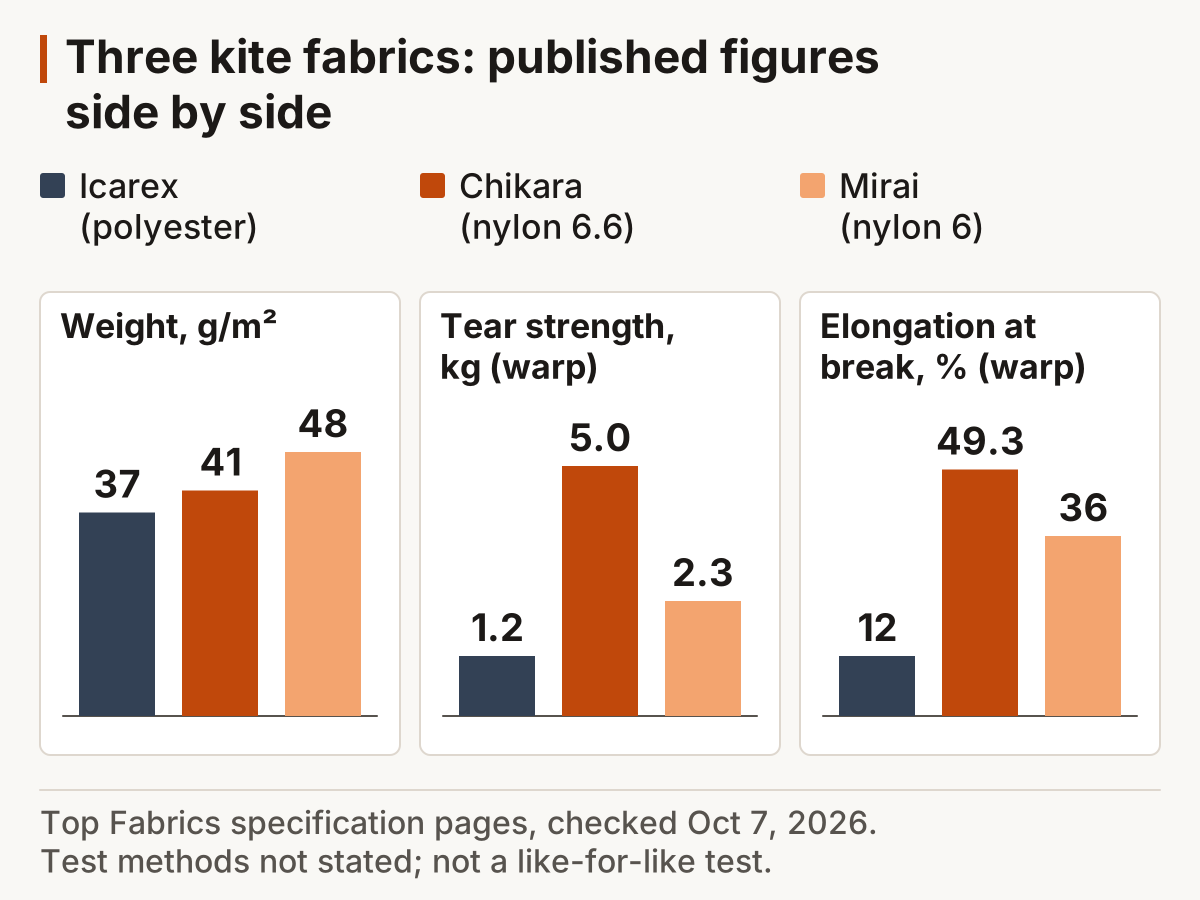
The numbers line up with what the distributor says in words. The Icarex page states that “polyester ripstop fabrics typically offer less tear resistance than nylon,” and that its very low stretch makes sport kites “more responsive and precise.” It also claims polyester keeps its colour and resists UV better than nylon. The nylon pages answer that “many nylon fabrics are attacked by ultraviolet radiation” but describe Chikara and Mirai as UV-resistant. Treat both sets of UV claims as the seller’s statements.
Kite makers’ choices are consistent with that description, though they do not explain them. Revolution uses Icarex polyester on its Reflex XX, Reflex RX and New York Minute quad-line kites, which it sells on precision, and ripstop nylon on the Reflex EXP, which it calls the most user-friendly and durable kite in its range. HQ uses ripstop nylon on its 295 cm Canard Delta and ripstop polyester on several deltas and foils. The stunt kite comparison explains why precise sails matter more on dual-line and quad-line kites.
Common mistake: Comparing tear figures from two different sellers. Tear values depend on the method; the ASTM tongue-tear standard says its results reflect comparative performance of similar fabrics “tested and measured in the same way.” Ask which method, direction and conditions produced each figure before comparing.
Takeaway: Treat nylon as the candidate when crash tolerance matters and polyester when shape-holding matters, then confirm with the specific fabric’s data.
Fabric weight: oz labels vs grams per square meter
Kite fabric is sold in the US under weight names such as “1/2 oz,” “3/4 oz” and “1.5 oz,” but those names do not convert cleanly into the g/m² on a spec sheet. A straight unit conversion, using NIST’s factor of 33.906 g/m² per ounce per square yard, gives the figures below.
| Label | Straight conversion | What a coated kite fabric in that class can weigh |
|---|---|---|
| 1/2 oz | 17.0 g/m² | Not listed by the sellers checked here |
| 3/4 oz | 25.4 g/m² | 41 g/m² (Chikara) and 48 g/m² (Mirai), both sold as “.75oz” by Fly Market |
| 1 oz | 33.9 g/m² | — |
| 1.5 oz | 50.9 g/m² | — |
| 2 oz | 67.8 g/m² | — |
The 1981 article offers one explanation for the gap: weights were then quoted “per square yard, before coating,” and coating added “1/8 to ½ oz. per yard.” As a worked example under that convention, a 3/4 oz base cloth would end up at roughly 0.875–1.25 oz per square yard once coated, about 30–42 g/m². Chikara at 41 g/m², sold as “.75oz,” falls inside that range, but the seller does not say how it defines the label, so ask. Icarex is labelled differently: its distributor calls it “PC-31,” 31 grams per square yard, which is simply 37 g/m² in metric units.
Yarn numbers add a second layer of labels. Denier is grams per 9,000 meters of yarn and dtex is grams per 10,000 meters, so 30 denier is about 33 dtex, matching the Chikara and Icarex sheets. Neither tells you the fabric weight, because that also depends on how tightly the yarn is woven and how much coating is added. A 40-denier nylon (Mirai, 48 g/m²) and a 30-denier nylon (Chikara, 41 g/m²) differ by more than yarn alone.
Common mistake: Treating “3/4 oz” as 25 g/m² of finished fabric. Ask the seller for the coated weight in g/m²; that is the number that affects how the kite flies.
Heavier cloth needs more wind to lift; the wind speed chart by kite type shows the Beaufort bands that published kite ratings cover.
Takeaway: Compare kite fabrics by coated weight in g/m²; treat oz names as class labels to be defined by the seller, and denier as a yarn measure, not a fabric weight.
Coatings: polyurethane, water-repellent finishes and airtightness
The coating is what turns a woven fabric into a sail. The 1981 article explains that it gives the cloth slickness and low porosity and makes it water- and windproof “to various degrees.” Modern kite fabrics specify the coating precisely.
| Coating | Example | Air permeability (distributor) | Distributor’s statements |
|---|---|---|---|
| Polyurethane, both sides | Icarex polyester | 0.02 cc/cm²/s | Distributor says it absorbs no water and keeps its shape in rain |
| Polyurethane, both sides, plus water-repellent finish | Chikara nylon | 0.03 cc/cm²/s | Water-repellent finish is now PFOA-free; coating minimizes water absorption |
| Polyurethane, one side, water-repellent both sides | Mirai nylon | 0.1 cc/cm²/s | Soft feel; sold for sport and foil kites |
Lower air permeability means less air leaks through the sail, which matters most for light-wind single line kites such as large deltas rated from Beaufort 1.5. ASTM’s air permeability method lists sails and parachutes among the fabrics where this property is important. The 1981 article offers a simpler field test: hold the fabric to your face and blow; “if air passes, the cloth fails.” It also notes that coating can be heavier on one side, and that the slicker side should face the wind.
Coatings do not last forever. In the same article, wind, weather and wear “eventually break down the crispness of the coating and soften the fabric,” so check an older sail with the blow test as well as by feel. If an older kite seems to need more wind than its rating, the sail is one thing to inspect; check the day’s wind against the wind speed chart as well.
Takeaway: For light-wind kites, compare air permeability measured the same way, within the strength the design needs, and expect the coating to soften with use.
Which fabric for which kite: a decision checklist
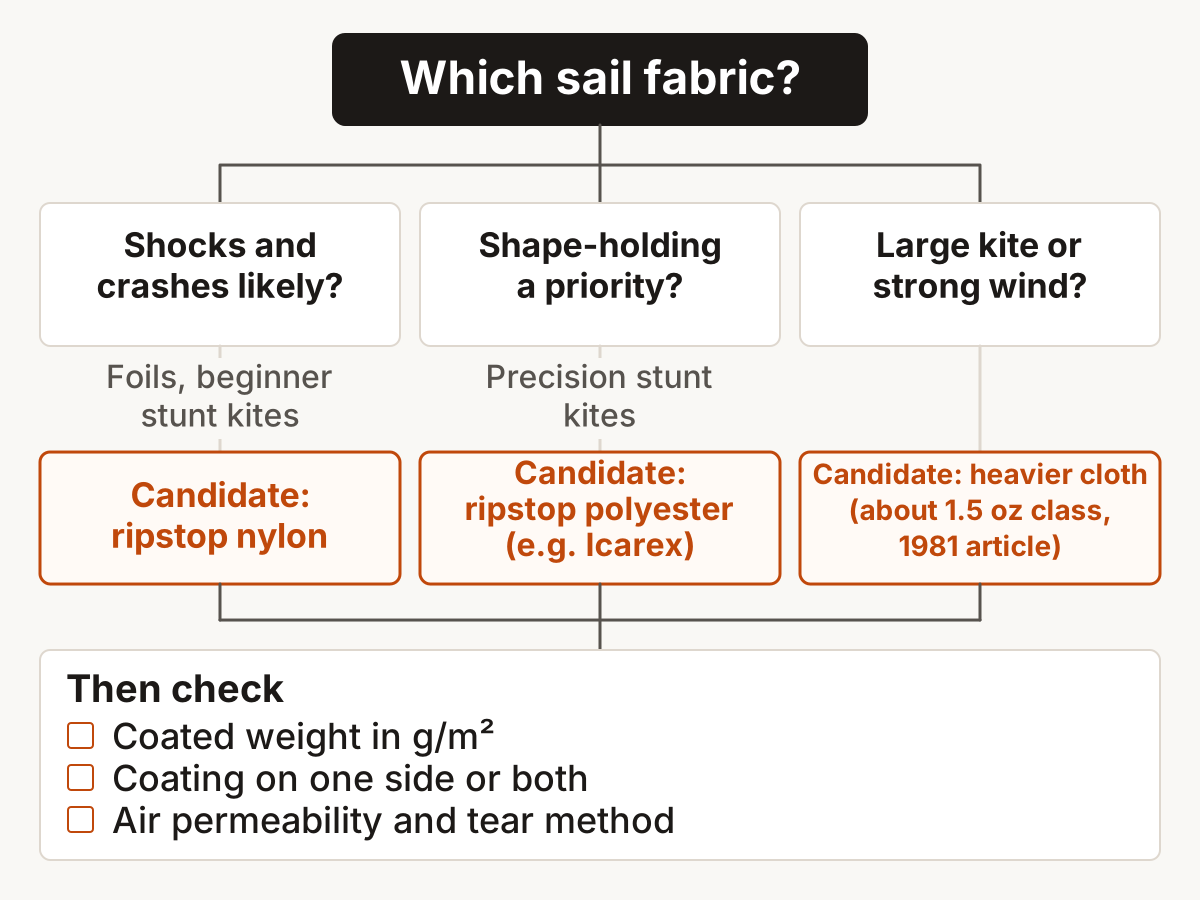
Match the fabric to what the kite has to survive, then to the wind it flies in. The directions below come from the specifications, makers’ choices and articles cited on this page.
| Kite or part | Fabric direction | Why (source) |
|---|---|---|
| Parafoils and soft foils | Ripstop nylon | Parafoils are most often made of it (encyclopedia); Mirai is sold for sport and foil kites to absorb shocks |
| Beginner and crash-prone stunt kites | Ripstop nylon | Higher tear figures on the Top Fabrics sheets; Revolution’s beginner Reflex EXP uses nylon |
| Precision stunt kites | Ripstop polyester such as Icarex | Lowest published elongation at break of the three (12–18%) and the distributor’s precision claim; used on Revolution’s precision models; the encyclopedia describes pro sails as treated ripstop polyester |
| Light-wind single line kites | Light, airtight coated ripstop that is still strong enough for the design | NASA’s kite pages say a kite must be as light as possible yet strong enough to withstand high winds |
| Large and high-wind kites | Heavier cloth | The 1981 article recommends about 1.5 oz cloth for large and high-wind designs and big parafoils |
| Reinforcements, tails, pockets, bags | 2–4 oz cloth | Recommended in the 1981 article for strips, tails, pockets and bags |
| Kites left up for long hours in sun | Check the UV claims for that exact fabric | Distributors claim UV resistance for both Icarex polyester and Chikara nylon; the 1981 article warns of fading and cracking after many hours in sunlight |
If you are building a single line kite, the single line kite type guide tells you which family you are building for, and the Kite Types section collects the rest. For a stunt kite, start from the line-count comparison and decide whether precision or crash tolerance matters more.
Takeaway: Shocks and crashes point to nylon; precision points to polyester; size and wind point to weight.
What are the disadvantages of ripstop fabric?
Ripstop still tears when punctured, is slippery to sew, loses coating crispness with wear and stretches on the bias; each fibre adds its own weakness.
- It still tears when punctured. The grid limits how far a tear runs; it does not stop a spar end or a sharp stick going through (1981 article).
- It is slippery to sew. The 1981 article calls the slipperiness “a blessing and a curse”: hard to hold, easy to realign.
- Coatings wear. Wind, weather and handling soften the coating over time, which raises porosity (1981 article).
- It stretches on the bias. Even ripstop stretches more along the diagonal than along the weave, so a kite cut with uneven bias on each side will pull to one side (1981 article).
- Nylon stretches and is sensitive to sun. Top Fabrics’ nylon pages acknowledge that many nylon fabrics are attacked by UV; their figures show about 36–51% elongation at break for nylon against 12–18% for polyester, which is why precision stunt kites tend to use polyester.
- Polyester tears more easily. The polyester distributor states that polyester ripstop typically has less tear resistance than nylon.
- Sand and sun age it. The 1981 article notes that sand is abrasive for kites flown at the beach and that sunlight causes colour loss and cracking after many hours.
Takeaway: Pick the fibre for the weakness you can live with: nylon’s stretch and sun sensitivity, or polyester’s lower tear resistance.
How kite fabric is tested, and what to ask a seller
Published fabric figures only mean something if you know how they were measured. Four ASTM methods cover the properties on kite fabric sheets.
| Property | ASTM method | What it measures |
|---|---|---|
| Weight | D3776/D3776M | Fabric mass per unit area (“fabric weight”), with four sampling options |
| Tear (pendulum) | D1424 | Force to propagate a single-rip tear from a cut, using a falling-pendulum (Elmendorf-type) tester |
| Tear (tongue) | D2261 | Tearing strength by the tongue (single-rip) procedure on a constant-rate-of-extension tensile tester |
| Air permeability | D737 | How much air passes through the fabric; important for parachutes and sails |
The Top Fabrics sheets we read do not name their test methods. Before you buy fabric by the yard, ask:
- Is the weight in g/m² for the coated fabric or the base cloth?
- Which tear method produced the tear figure, and in which direction (warp or fill)?
- Is the coating on one side or both, and is there a water-repellent finish?
- What is the air permeability, and how was it measured?
- What is the fibre: nylon 6, nylon 6.6 or polyester?
Takeaway: Only compare numbers produced by the same method; when a seller cannot say which method, treat the figure as a rough guide.
Care and repair basics
Wash it gently, dry it fully, patch small holes early and keep it out of the sun between flights. The 1981 article says ripstop nylon can be washed in warm water and hung on a line to dry, but should not go in a dryer; light surface dirt comes out, deep stains may not, and it holds suds for a long time. For repairs, the encyclopedia entries list self-adhesive ripstop patches for fabric repairs and tedlar tape for fixing punctured sport kite sails.
- Shake or rinse off sand after beach sessions; it is abrasive on the sail (1981 article).
- Dry the kite before storing it.
- Patch small holes promptly with self-adhesive ripstop or tape so the tear does not grow.
- Store kites out of sunlight between sessions to limit colour loss and cracking.
This guide sits in the Materials and Care section.
Takeaway: Wash gently, dry fully, patch small holes early and keep kites out of the sun between flights.
When this does not apply
- The performance figures here are a distributor’s published values without stated test methods; they compare three named fabrics, not nylon and polyester in general.
- The weight-label explanation comes from a 1981 article and one current retailer’s listings; other sellers may quote coated weight. Ask which basis they use.
- Kite surfing, paragliding and traction kite fabrics have their own specifications and safety requirements outside this guide.
- Non-ripstop materials such as taffeta and Mylar laminates are mentioned only where kites in our sources use them; HQ’s 4 m Delta Fireworks, for example, combines ripstop polyester with Mylar.
Takeaway: Use the figures here to compare these named fabrics, and ask the seller for the basis of any other numbers.
Related reading
- Single line kites: types and how to choose — See which sail materials appear on each kind of single line kite.
- Stunt kites compared — Understand why precision sails matter on dual-line and quad-line kites.
- Kite wind speed chart — Check published kite wind ranges against the day’s Beaufort force.
- Materials and Care — Browse fabric and care guides.
Method and sources: how this comparison was put together
This page compares published specifications; nobody on this site tested these fabrics. Fabric figures come from the specification pages of Top Fabrics for Icarex, Chikara and Mirai, quoted as published; the Icarex page contains some mislabelled fields, so its fibre is taken from the “Material: Polyester” line, and its grid, coating, UV and precision statements are reported as the distributor’s claims. The weight-label explanation, sewing and care points come from G. William Tyrrell Jr.‘s 1981 Kite Lines article as reprinted in 2015, which is old and labelled as such, and from Fly Market’s current listings. Unit conversions use NIST Special Publication 811; test method descriptions come from ASTM’s published scope statements. Kite makers’ fabric choices come from Revolution Kites’ and HQ’s product pages, the point on light weight from NASA Glenn’s kite pages, and definitions from encyclopedia entries. All sources were accessed on October 7, 2026, and are listed under References below.
Frequently Asked Questions
What is the best fabric for kites?
Coated ripstop, in nylon or polyester, is the usual kite sail fabric. On one distributor's published sheets, its nylon lists higher tear figures and more stretch at break, and its polyester less stretch; the polyester distributor also claims better colour retention in sun. Foils and beginner kites often use nylon, precision stunt kites polyester.
What is ripstop nylon good for?
Anything that needs a light, tear-resistant fabric: kites, parachutes, sails, tents, hot-air balloons and outdoor gear all use it, according to the encyclopedia entry on ripstop. For kites, a coated version gives a light, low-porosity sail that resists small tears spreading.
Is ripstop nylon waterproof?
Coated ripstop resists water to a degree, but that is a side effect. A 1981 kitemaking article describes coatings as making the cloth water- and windproof to various degrees; the distributor of Chikara says its polyurethane coating minimizes water absorption. For kites, the coating's main job is keeping the sail airtight.
How strong is ripstop nylon?
It depends on the fabric. One kite nylon, Chikara, is listed by its distributor at 5.0 kg tear strength and 36–40 kg breaking strength per 5 cm strip, against 1.2 kg and 28–31 kg for Icarex polyester. Test methods are not stated, so treat these as published figures, not a like-for-like test.
What is 40D ripstop nylon?
The 40D means the yarn is 40 denier: 40 grams per 9,000 meters of yarn. It describes the thread, not the finished cloth. Mirai, a 40-denier nylon sold for sport and foil kites, weighs 48 g/m² with a one-sided coating; denier alone does not tell you the fabric weight.
What is ripstop nylon made of?
Nylon yarn woven with thicker reinforcement yarns at regular intervals; kite ripstop is usually coated as well, with polyurethane or a similar coating rolled in. Kite nylons are typically nylon 6.6 or nylon 6; Chikara is listed as 30-denier nylon 6.6 and Mirai as 40-denier nylon 6.
References & Sources
- Ripstop — Wikipedia
- Mastering Nylon (G. William Tyrrell Jr., Kite Lines, 1981; reprinted in Kiting, Summer 2015) — Fly Market Kitemaking Supply (PDF)
- Icarex: high-end ripstop polyester (specifications) — Top Fabrics
- Chikara: high-end ripstop nylon (specifications) — Top Fabrics
- Mirai: ripstop nylon (specifications) — Top Fabrics
- Chikara .75oz Ripstop Nylon — Fly Market Kitemaking Supply
- NIST Guide to the SI, Appendix B.8: Factors for units listed alphabetically — National Institute of Standards and Technology
- ASTM D3776/D3776M: Mass Per Unit Area (Weight) of Fabric — ASTM International
- ASTM D1424: Tearing Strength of Fabrics by Falling-Pendulum (Elmendorf-Type) Apparatus — ASTM International
- ASTM D2261: Tearing Strength of Fabrics by the Tongue (Single Rip) Procedure — ASTM International
- ASTM D737: Air Permeability of Textile Fabrics — ASTM International
- Parafoil — Wikipedia
- Sport kite — Wikipedia
- Revolution Reflex XX (product page) — Revolution Kites
- Revolution Reflex EXP (product page) — Revolution Kites
- Hoffmanns Canard Delta (product page) — Invento / HQ
- Delta Fireworks 4 m (product page) — Invento / HQ
- Kites — NASA Glenn Research Center, Beginner's Guide to Aeronautics
- Revolution Reflex RX (product page) — Revolution Kites
- New York Minute Quad Line Kite with Reflex (product page) — Revolution Kites
- Delta Spectrum Spin 2m (product page) — Invento / HQ
- Symphony Beach III 1.3 (product page) — Invento / HQ